


The Night Fair — Surrealist Circus Fair Art Print
The Night Fair — Surrealist Circus Fair Art Print
Couldn't load pickup availability
About our restored prints
About our restored prints
Expertly restored: tears and stains are fixed, original clarity and depth of color are thoughtfully revived.
- Printed on museum-quality fine art paper
- Archival inks for long-lasting color
- Professionally color-calibrated
- Most framed prints ship unassembled for safety. Assembly is simple.
Shipping & Return Policy
Shipping & Return Policy
Classic Prints/Framed prints: 1-2 weeks
Frames & Decor: 2-3 weeks
Custom Frames: 2-3 weeks
Returns within 2 weeks.
Custom Framed prints are hand assembled and cannot be returned.
See policies in the footer
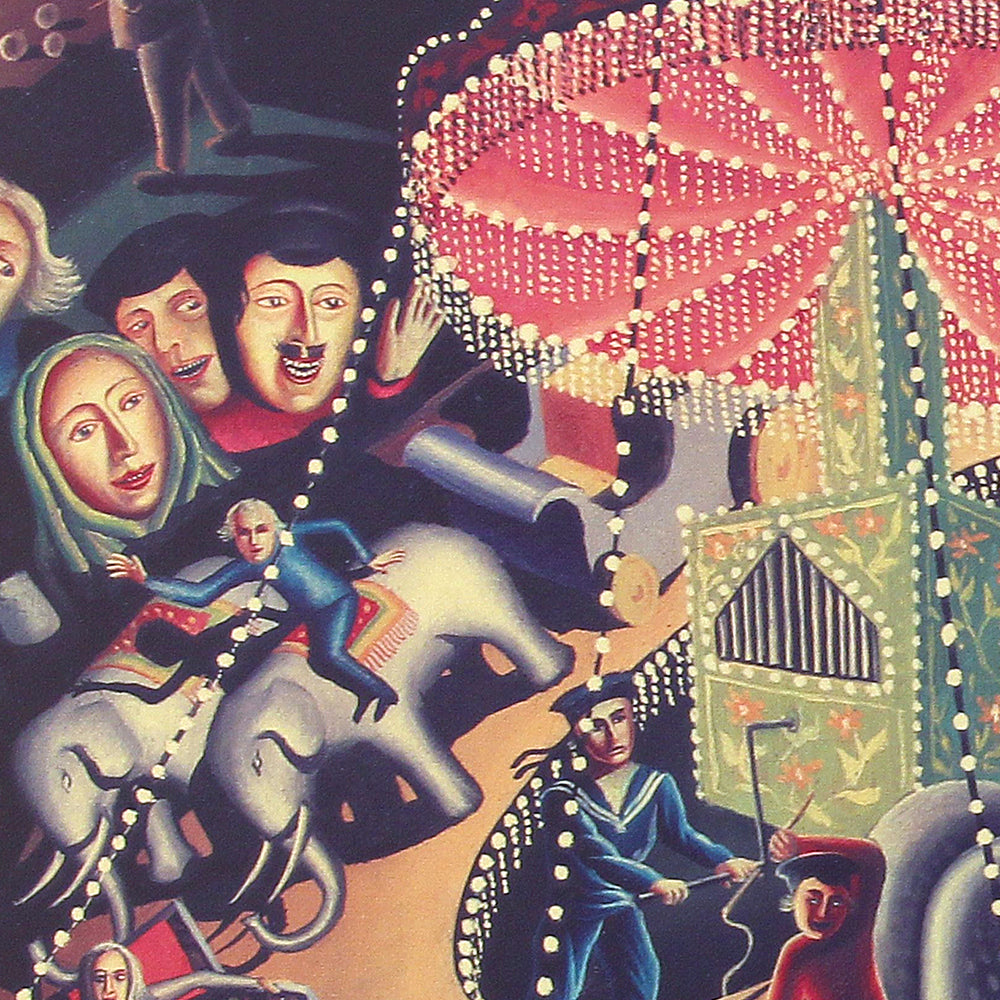
The kinetic energy of a traditional folk festival is set against a deep indigo sky. A central, illuminated carousel anchors the scene, its radiant pink and white lights casting a glow over a dense crowd of revelers, street performers, and vendors. The atmosphere is one of organized chaos, where the joy of the festivities is balanced by the sharp, angular shadows and intense expressions characteristic of Eastern European folk surrealism.
Why We Picked It
The use of forced perspective and a non-linear narrative, pulls the viewer through various vignettes of communal life. The color palette relies on a sophisticated contrast between warm vermillion and cool midnight blues, creating a sense of nocturnal warmth. Tactile details—from the patterned horses of the carousel to the graphic lettering on the wooden stalls—provide a rich visual texture that rewards prolonged observation in intimate interiors.
Notable Context
This piece reflects the Lubok tradition and the Primitivist movement of the early 20th century, which sought to reclaim the raw, honest energy of folk art in the face of rapid industrialization. The imagery of the carousel and the public square serves as a metaphor for the cyclical nature of village life and the shared cultural heritage of the peasantry. Such works often emerged as a response to the "analog movement" of their time, preserving local identity and oral histories through bold, accessible iconography that defied formal academic constraints.
About the Artist
Walter Spies (1895–1942) was a pivotal figure in the 1920s avant-garde, known for synthesizing Western techniques with intricate cultural narratives. His style is defined by a meticulously architectural approach to light and a "primitivist-modern" fusion that prioritized emotional atmosphere over literalism. Spies remains a critical figure for his contributions to cross-cultural artistic exchange and his ability to render complex, rhythmic energy through a cinematic lens.


Find a matching frame
-
Ornate Gold Frame — Baroque Rococo Deep Relief Gilded Picture Frame
Regular price $39.00 USDRegular priceUnit price per -
Verdant Press Frame — Rococo Victorian Deep Green Distressed Gold Picture Frame
Regular price $65.00 USDRegular priceUnit price per -
Baroque in Black and Gold Frame — Rococo Ornate Lacquer Picture Frame
Regular price $70.00 USDRegular priceUnit price per -
Classic Beveled Wood Frames – Square (12x12), Rectangular (12x16/16x20)
Regular price From $55.00 USDRegular priceUnit price per -
Old World Beauty Frame — Gothic Revival Baroque Ornate Vintage Picture Frame
Regular price $60.00 USDRegular priceUnit price per


