PREMIUM
◆ Victorian Compote - custom frame (non-returnable)
◆ Victorian Compote - custom frame (non-returnable)
Couldn't load pickup availability
About our restored prints
About our restored prints
Expertly restored: tears and stains are fixed, original clarity and depth of color are thoughtfully revived.
- Printed on museum-quality fine art paper
- Archival inks for long-lasting color
- Professionally color-calibrated
- Most framed prints ship unassembled for safety. Assembly is simple.
Shipping & Return Policy
Shipping & Return Policy
Classic Prints/Framed prints: 1-2 weeks
Frames & Decor: 2-3 weeks
Custom Frames: 2-3 weeks
Returns within 2 weeks.
Custom Framed prints are hand assembled and cannot be returned.
See policies in the footer
Classic vs. Premium
Classic vs. Premium
Classic Line = Affordable unframed prints and framed options
Premium - Prints in hand-built period frames
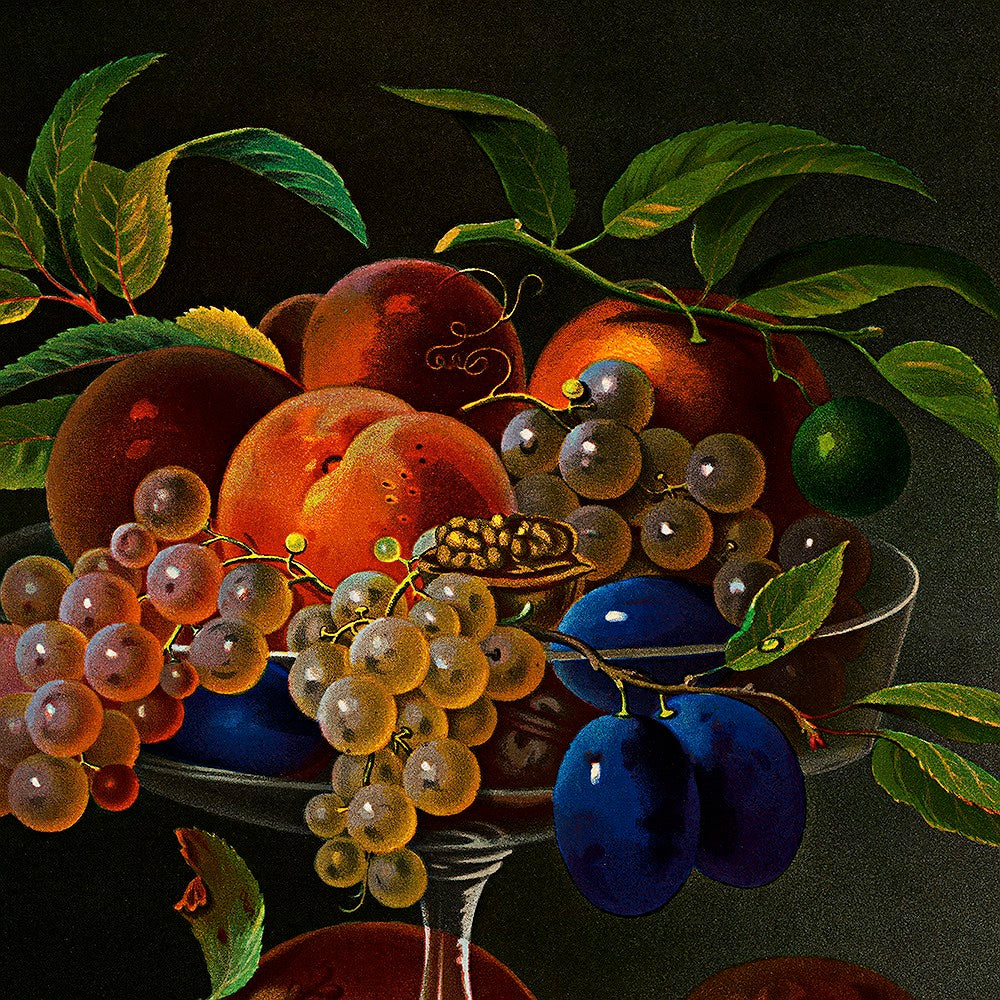
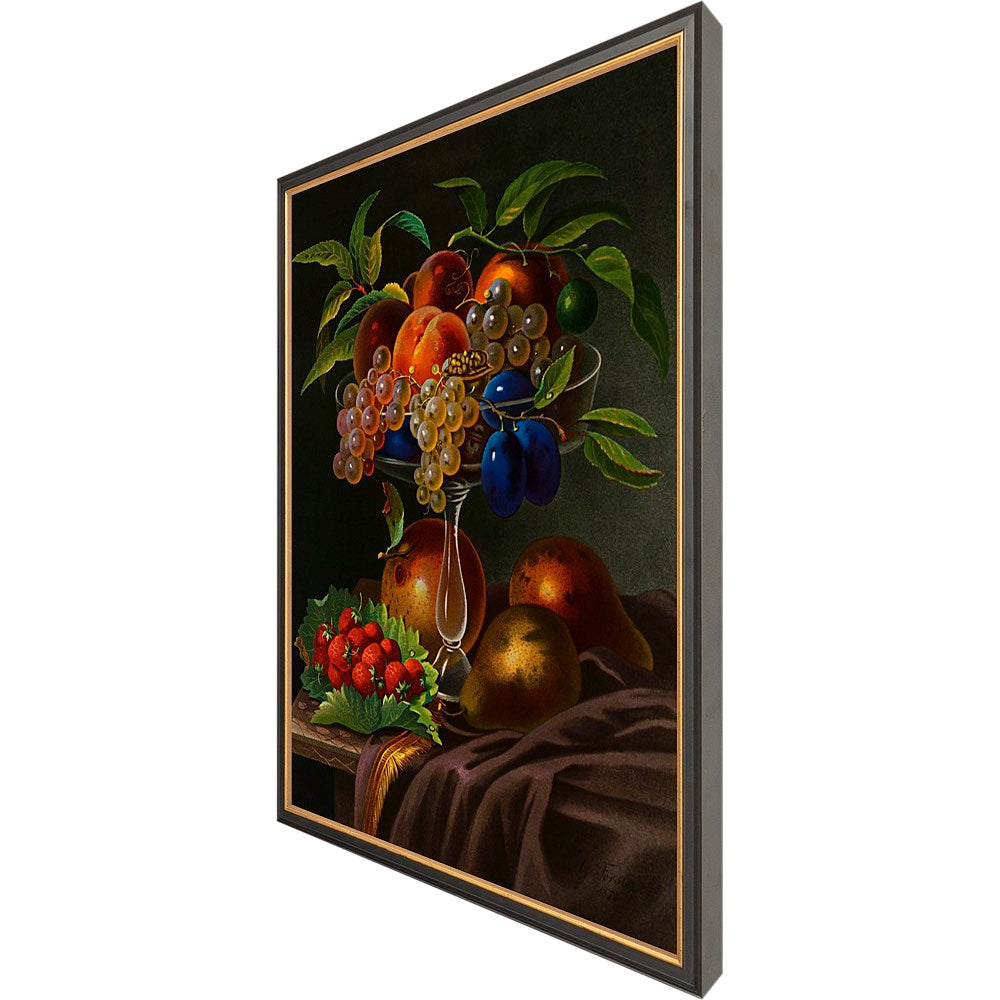
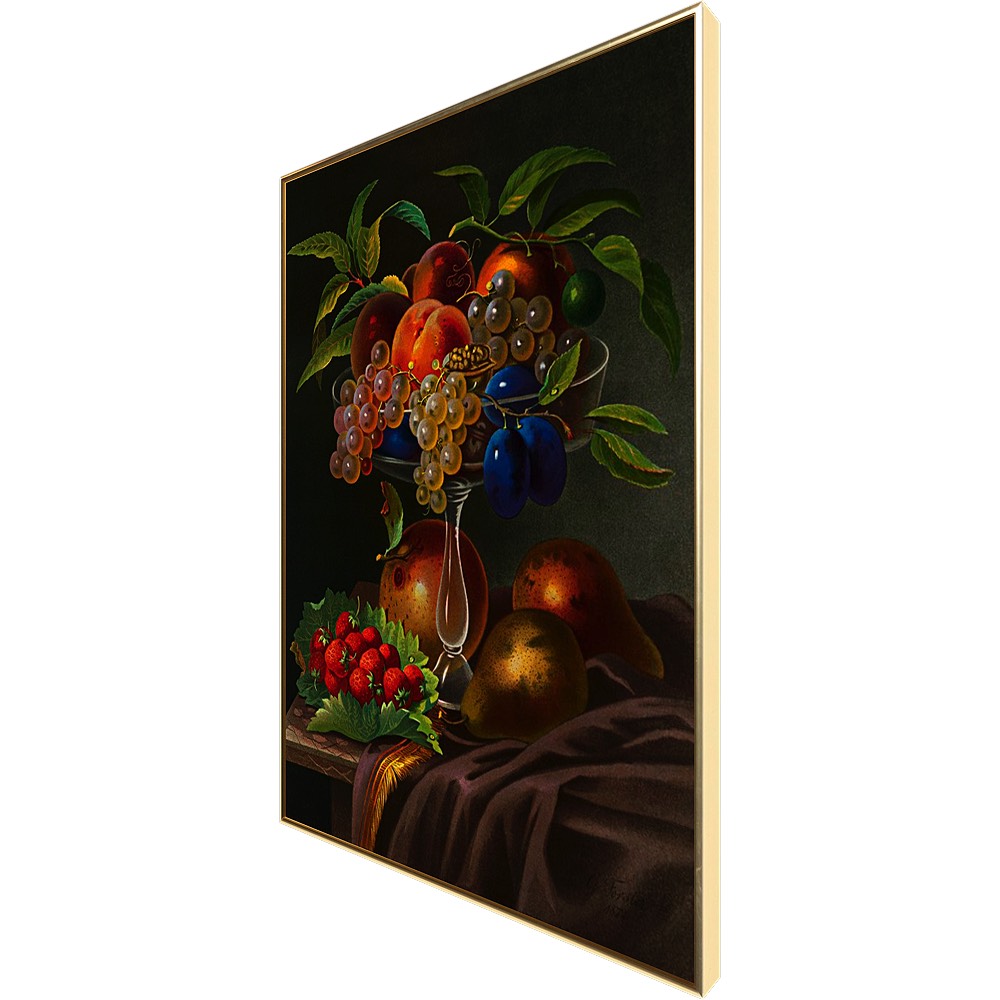
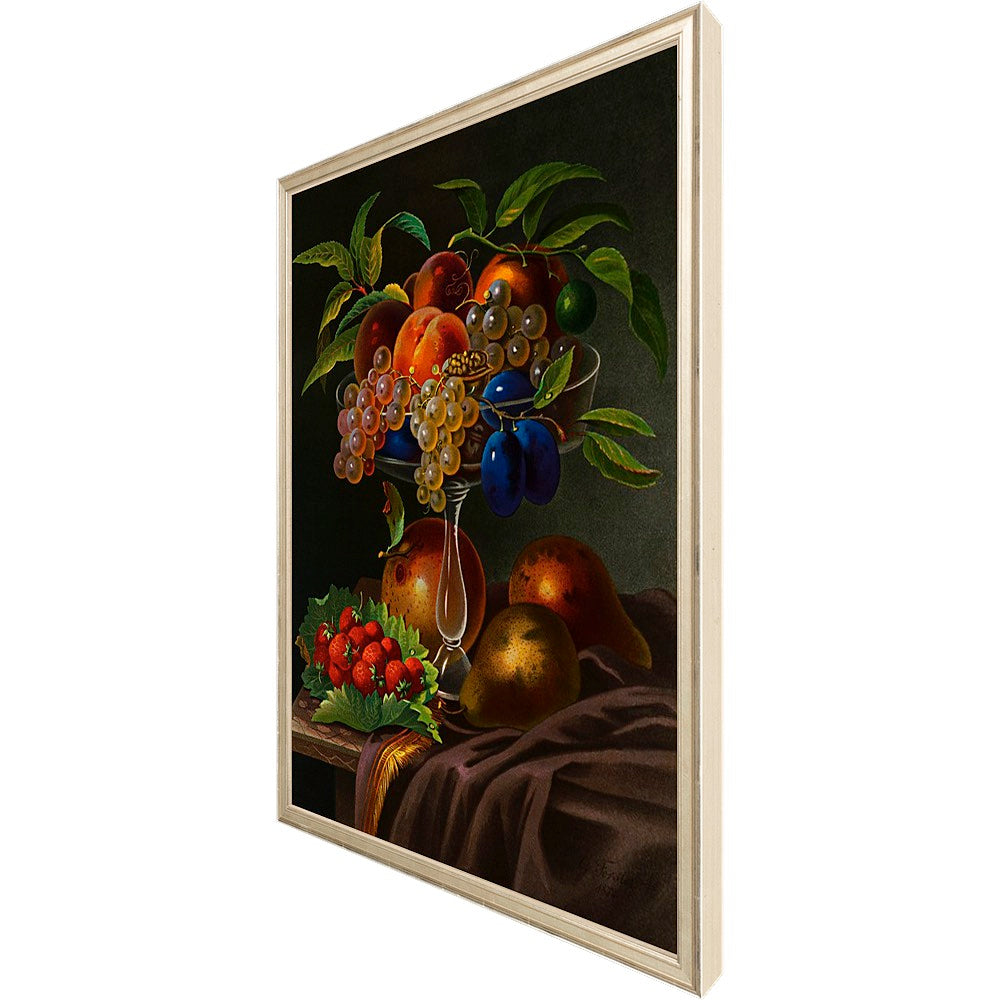
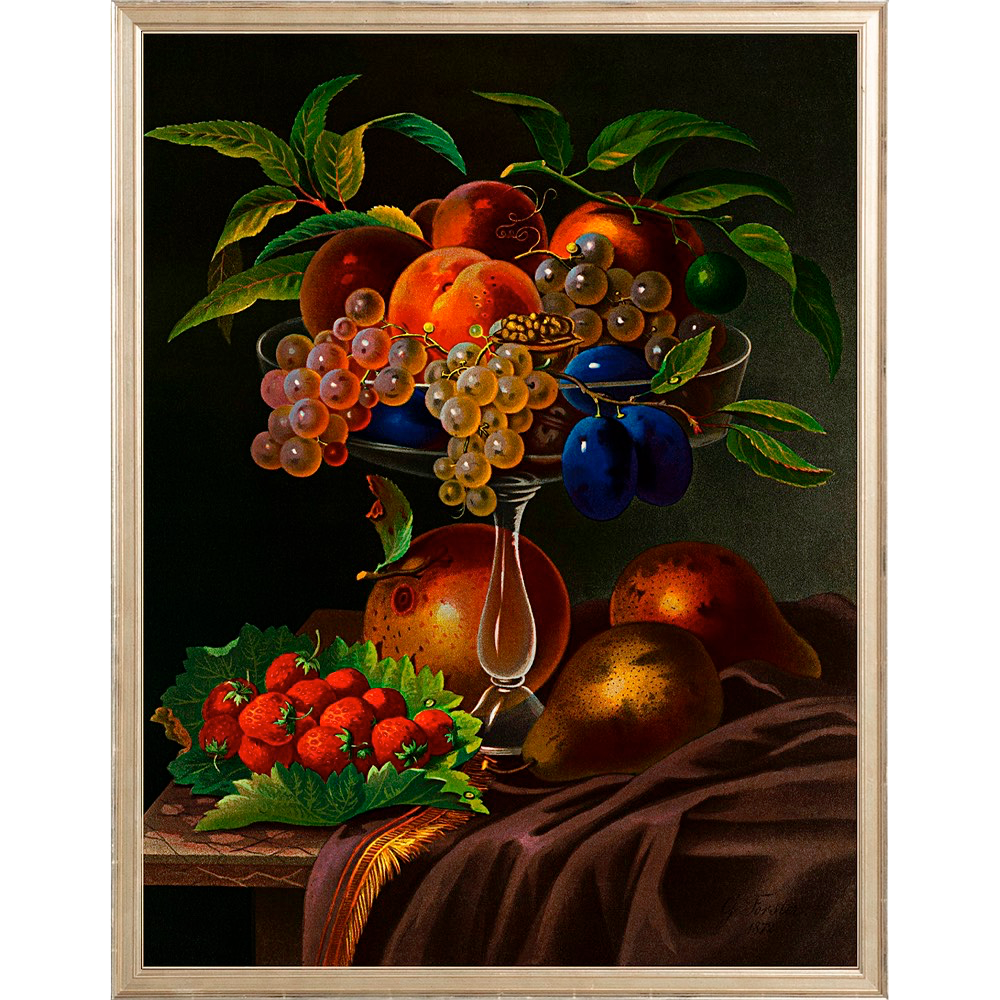
The still life centers on a clear glass fruit bowl with a slender stem. Inside the bowl, clusters of deep purple grapes, and peaches rest among vibrant green leaves. A few small, deep blue plums add a pop of dark color.
On the table below, the bright red strawberries contrasts with the deeper tones in the bowl and table. Soft lighting creates gentle shadows, accentuating the contours of the fruit and the elegant design of the bowl. The scene balances color and texture, evoking a sense of freshness and quiet beauty.
Why We Picked It
The transparent glass bowl allows for interesting reflections and light play, while the mix of fruits brings a sense of abundance. The emphasis on soft lighting and gentle shadows adds to the overall atmosphere of elegance and sophistication, aligning with Victorian ideals of taste and refinement. This type of arrangement can fit into various settings as it's both classic and timeless.
Notable Context
In Victorian times, glass compote dishes were popular for displaying fruit and desserts. They often featured intricate etchings, cut-glass patterns, or elaborate stem designs, reflecting the ornate aesthetics of the era.
The use of the compote dish reflects the ornate aesthetics and material culture of the Victorian era. These dishes were popular household items during this time, prized for their decorative appeal and functional versatility. They often featured intricate etchings, cut-glass patterns, or elaborate stem designs; craftsmanship characteristic of Victorian decorative arts.
Victorians often interpreted artworks through a lens of moral, religious, or cultural symbolism. Still life painting was a popular genre valued for its ability to capture the beauty of everyday objects and convey deeper symbolic meanings. The grapes symbolize abundance, fertility, and the harvest, while strawberries represent sweetness, indulgence, and sensuality. Peaches, with their soft, velvety skin and sweet flavor, were a popular fruit in Victorian cuisine and symbolized longevity, fertility, and prosperity. Velvet was a highly prized and luxurious fabric, often associated with wealth, status, and sophistication.