


The Kuiper Moon 1960 — NASA Pioneering Lunar Map Print
The Kuiper Moon 1960 — NASA Pioneering Lunar Map Print
Couldn't load pickup availability
About our restored prints
About our restored prints
Expertly restored: tears and stains are fixed, original clarity and depth of color are thoughtfully revived.
- Printed on museum-quality fine art paper
- Archival inks for long-lasting color
- Professionally color-calibrated
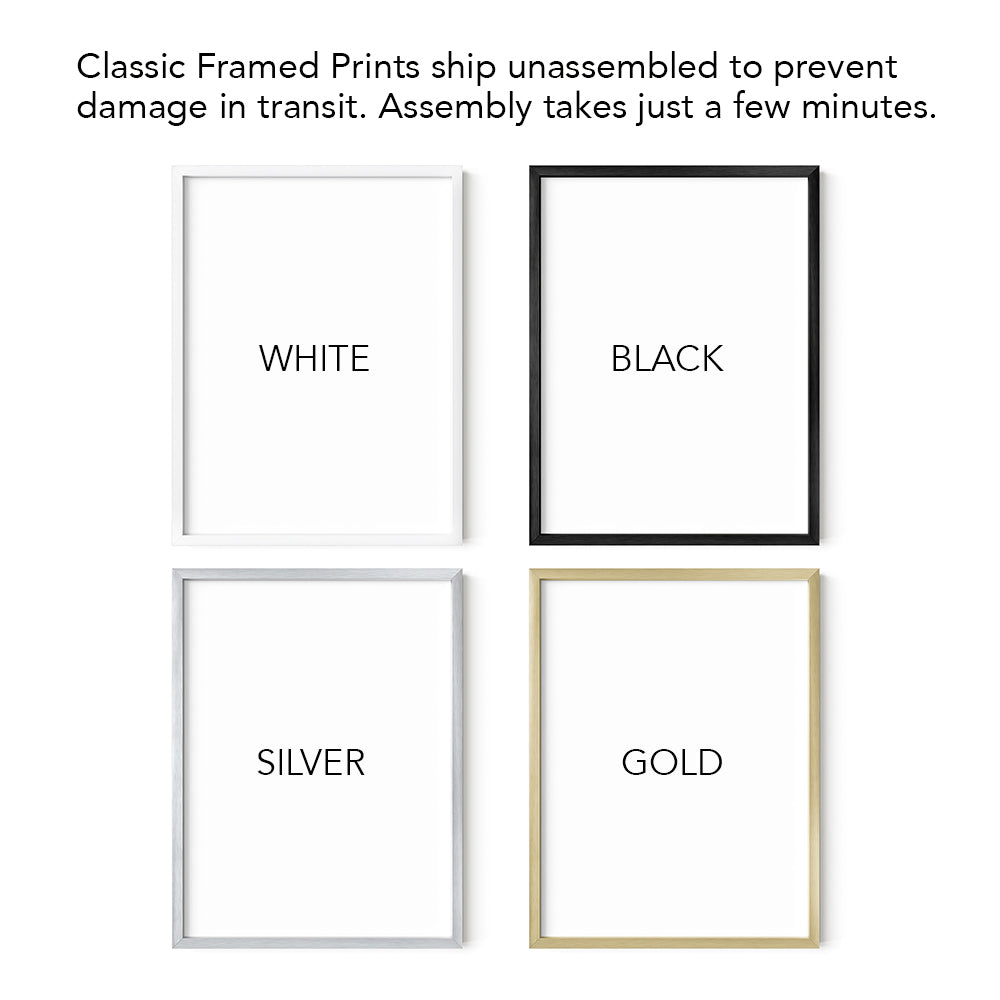
- Most framed prints ship unassembled for safety. Assembly is simple.
Shipping & Return Policy
Shipping & Return Policy
Classic Prints/Framed prints: 1-2 weeks
Frames & Decor: 2-3 weeks
Custom Frames: 2-3 weeks
Returns within 2 weeks.
Custom Framed prints are hand assembled and cannot be returned.
See policies in the footer
The last map of the Moon made entirely from Earth. Gerard Kuiper's 1960 lunar synthesis combined photographs from five observatories, accounting for the Moon's wobble and using terminator shadows to calculate mountain heights. The primary purpose was not to document the Moon but to find a safe landing site for the Apollo missions — this was the first time scientists approached the Moon as a practical problem rather than a celestial object. The high-contrast interplay of brilliant highlands against ink-dark maria, with the Tycho crater's ray system spreading outward like a diagram of consequence, produces an image that is both scientific document and quietly beautiful object. It is a man-made composition created from data.
Why We Picked It
The visual authority of this print comes from its objectivity. Unlike later satellite maps which flatten the lunar surface into topographic abstraction, this is a photographic image — the Moon as it actually appears through a telescope, rendered with the full tonal range that high-contrast monochrome lithography achieves. The Tycho crater's ray system provides a strong radial focal point against the softer textures of the Mare Imbrium. The irregularities in tone across the maria come from assembling a composite using images from five different observatories, each with slightly different exposures.
Notable Context
The Photographic Lunar Atlas was commissioned at the height of the Cold War Space Race, published by the University of Chicago Press in 1960 to provide NASA with a definitive topographical record for the Apollo programme. What made the synthesis remarkable was how it was made — five observatories combined manually, without satellite technology, accounting for the Moon's wobble and calculating mountain heights from shadow length alone.
Because they couldn't fly over the surface, they had to wait for the "terminator line" (the line between day and night) to move. This meant that images taken at different sun angles were used to calculate the actual height of mountains based purely on the length of their shadows (no easy feat to calculate heights and depths from millions of miles away). This was the first time scientists approached the Moon not as a celestial object but as a landing problem. They were, as Kuiper described it, looking for parking spots — maria flat enough for a Lunar Excursion Module to land without tipping over.
About the Publisher
Gerard P. Kuiper (1905–1973) was a Dutch-American astronomer widely regarded as the father of modern planetary science. He discovered the atmosphere of Titan in 1944, identified two previously unknown moons — Miranda orbiting Uranus and Nereid orbiting Neptune — and in 1951 proposed the existence of what is now called the Kuiper Belt, a disk of icy bodies beyond Neptune confirmed in the 1990s. The lunar atlas project began in 1955 when Kuiper posted a notice at an International Astronomical Union conference looking for a collaborator — the only person to respond was astronomer Ewen Whitaker, beginning a partnership that produced four lunar atlases and led directly to their work identifying Apollo landing sites. His 1964 prediction of what the surface of the Moon would feel like to walk on — "like crunchy snow" — was confirmed by Neil Armstrong in 1969. Without the technological tools that would come later, he produced a composite of extraordinary precision from purely Earth-bound observation.


Find a matching frame
-
Ornate Gold Frame — Baroque Rococo Deep Relief Gilded Picture Frame
Regular price $39.00 USDRegular priceUnit price per -
Verdant Press Frame — Rococo Victorian Deep Green Distressed Gold Picture Frame
Regular price $65.00 USDRegular priceUnit price per -
Baroque in Black and Gold Frame — Rococo Ornate Lacquer Picture Frame
Regular price $70.00 USDRegular priceUnit price per -
Classic Beveled Wood Frames – Square (12x12), Rectangular (12x16/16x20)
Regular price From $55.00 USDRegular priceUnit price per -
Old World Beauty Frame — Gothic Revival Baroque Ornate Vintage Picture Frame
Regular price $60.00 USDRegular priceUnit price per


