


Paris Exposition 1900 — Vintage World’s Fair Poster Print
Paris Exposition 1900 — Vintage World’s Fair Poster Print
Couldn't load pickup availability
About our restored prints
About our restored prints
Expertly restored: tears and stains are fixed, original clarity and depth of color are thoughtfully revived.
- Printed on museum-quality fine art paper
- Archival inks for long-lasting color
- Professionally color-calibrated
- Most framed prints ship unassembled for safety. Assembly is simple.
Shipping & Return Policy
Shipping & Return Policy
Classic Prints/Framed prints: 1-2 weeks
Frames & Decor: 2-3 weeks
Custom Frames: 2-3 weeks
Returns within 2 weeks.
Custom Framed prints are hand assembled and cannot be returned.
See policies in the footer
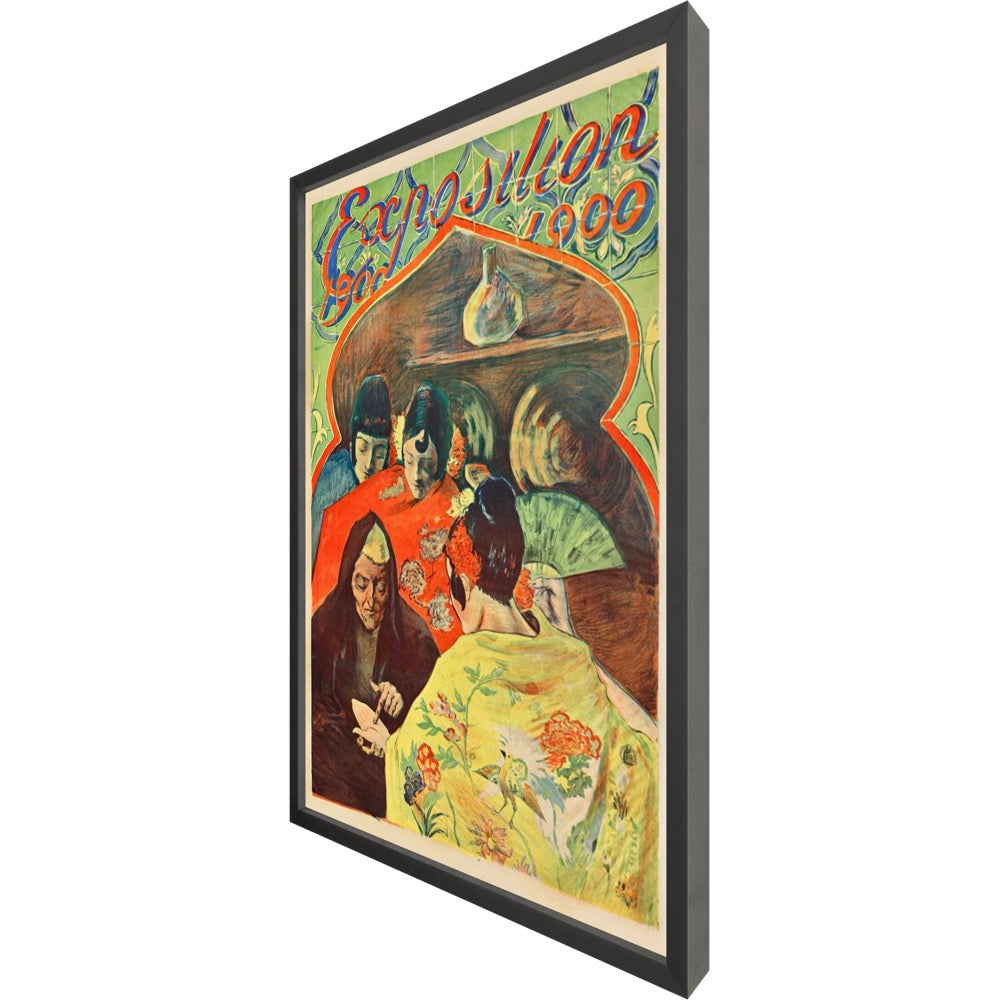
A color lithograph created for the 1900 Exposition Universelle in Paris. It shows four women gathered around a palm reader, framed by rich textiles and patterned backgrounds.
Why We Picked It
The composition is carefully arranged, with curved lines and layered figures that guide the eye around the scene. Bold color contrasts—bright reds, pale greens, deep blacks and browns—create a sense of depth and texture. The decorative patterns on the clothing and background reflect the Art Nouveau style, while the subject matter draws on popular interest in “exotic” cultures. The image feels staged yet like an intimate scene from a play.
Notable Context
This print was part of the broader visual culture of the 1900 World’s Fair, where colonial displays and decorative arts from around the world were a major draw. Itreflects both Japonisme and Orientalism, both of which were widespread in European art at the time. French artists and audiences were fascinated by Japanese prints and imagery from Asia, often reinterpreting them through a European lens. Sometimes works were shaped more by imagination and popular culture than direct experience.
The poster has a revenue stamp. In 1881, France enacted a law requiring that all posters displayed in public spaces bear a revenue stamp to indicate that a fee had been paid for the right to post them. This measure was part of a broader effort to regulate advertising and ensure that public spaces were used appropriately.
The revenue stamps, known as "timbres fiscaux", were affixed to posters to signify that the necessary tax had been paid.The amount of the stamp often corresponded to the size of the poster, with larger posters requiring higher-value stamps.


Find a matching frame
-
Ornate Gold Frame — Baroque Rococo Deep Relief Gilded Picture Frame
Regular price $39.00 USDRegular priceUnit price per -
Verdant Press Frame — Rococo Victorian Deep Green Distressed Gold Picture Frame
Regular price $65.00 USDRegular priceUnit price per -
Baroque in Black and Gold Frame — Rococo Ornate Lacquer Picture Frame
Regular price $70.00 USDRegular priceUnit price per -
Classic Beveled Wood Frames – Square (12x12), Rectangular (12x16/16x20)
Regular price From $55.00 USDRegular priceUnit price per -
Old World Beauty Frame — Gothic Revival Baroque Ornate Vintage Picture Frame
Regular price $60.00 USDRegular priceUnit price per


