


Emerald Fan — Vintage Art Nouveau Fashion & Figurative Print
Emerald Fan — Vintage Art Nouveau Fashion & Figurative Print
Couldn't load pickup availability
About our restored prints
About our restored prints
Expertly restored: tears and stains are fixed, original clarity and depth of color are thoughtfully revived.
- Printed on museum-quality fine art paper
- Archival inks for long-lasting color
- Professionally color-calibrated
- Most framed prints ship unassembled for safety. Assembly is simple.
Shipping & Return Policy
Shipping & Return Policy
Classic Prints/Framed prints: 1-2 weeks
Frames & Decor: 2-3 weeks
Custom Frames: 2-3 weeks
Returns within 2 weeks.
Custom Framed prints are hand assembled and cannot be returned.
See policies in the footer
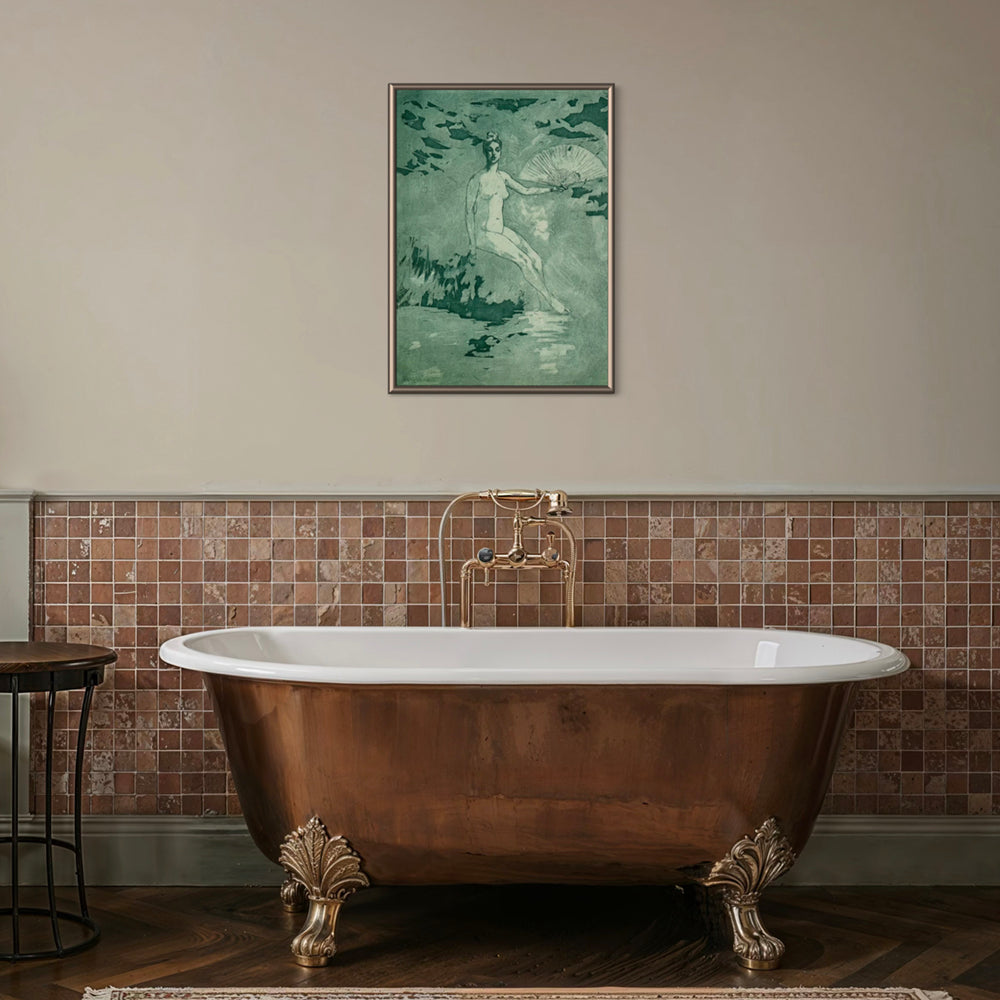
This evocative print presents a seated nude figure in a state of quiet solitude, her form framed by the delicate arc of an open fan. Rendered in a saturated, monochromatic palette of emerald and seafoam, the work creates a submerged, aquatic atmosphere that blurs the line between the physical and the ethereal. The interplay of soft-ground etching and fine drypoint lines produces a textured, misty backdrop, inviting a meditative viewing experience that prioritizes mood over traditional realism.
Why We Picked It
What makes this piece essential is Roussel’s revolutionary approach to tonal harmony. Unlike many of his contemporaries who used color for literal representation, Roussel used it to dictate the emotional temperature of the entire composition. The "broken" texture of the background—achieved through meticulous acid-biting and aquatint—surrounds the figure with a vibrating energy that contrasts with her stillness. The choice of a fan as a central prop is a sophisticated nod to Japonisme, used here not just for ornament but as a structural device to balance the curves of the figure.
Notable Context
The creation of this work coincided with a period of profound global transformation, most notably the International Exhibition of 1889 in Paris and the subsequent rise of the Decadent Movement. While Roussel was working in London, the art world was reeling from the "shock of the new"—the Eiffel Tower had just been completed, symbolizing a shift toward industrial iron and steel that stood in stark contrast to the organic, ethereal subjects Roussel chose to depict. This piece serves as a silent protest against the encroaching mechanical age, favoring the slow, artisanal hand-inked process over the rapid reproduction methods of the early industrial era.
Furthermore, the late 19th century was the height of the Aesthetic Movement, defined by the mantra "art for art's sake." This was a direct response to the rigid moralism of the Victorian era. The emerald-green palette itself carries historical weight; during this time, "Paris Green" and "Scheele's Green" were infamous for their arsenic content, yet they remained the height of fashion in wallpaper and textiles. By bathing his subject in this saturated, almost artificial green, Roussel leaned into the "artificiality" championed by writers like Oscar Wilde and Joris-Karl Huysmans, who argued that art should surpass nature rather than merely imitate it.
About the Artist
Théodore Roussel (1847–1926) was a French-born artist who spent the majority of his career in London, becoming a leading figure in the British avant-garde. Largely self-taught, he developed a reputation for technical perfectionism and was elected the founding president of the Society of Graver-Printers in Colour. Roussel is most famous for his "Roussel Medium," a secret water-based printing process he developed toward the end of his life.


Find a matching frame
-
Ornate Gold Frame — Baroque Rococo Deep Relief Gilded Picture Frame
Regular price $39.00 USDRegular priceUnit price per -
Verdant Press Frame — Rococo Victorian Deep Green Distressed Gold Picture Frame
Regular price $65.00 USDRegular priceUnit price per -
Baroque in Black and Gold Frame — Rococo Ornate Lacquer Picture Frame
Regular price $70.00 USDRegular priceUnit price per -
Classic Beveled Wood Frames – Square (12x12), Rectangular (12x16/16x20)
Regular price From $55.00 USDRegular priceUnit price per -
Old World Beauty Frame — Gothic Revival Baroque Ornate Vintage Picture Frame
Regular price $60.00 USDRegular priceUnit price per


