CLASSIC
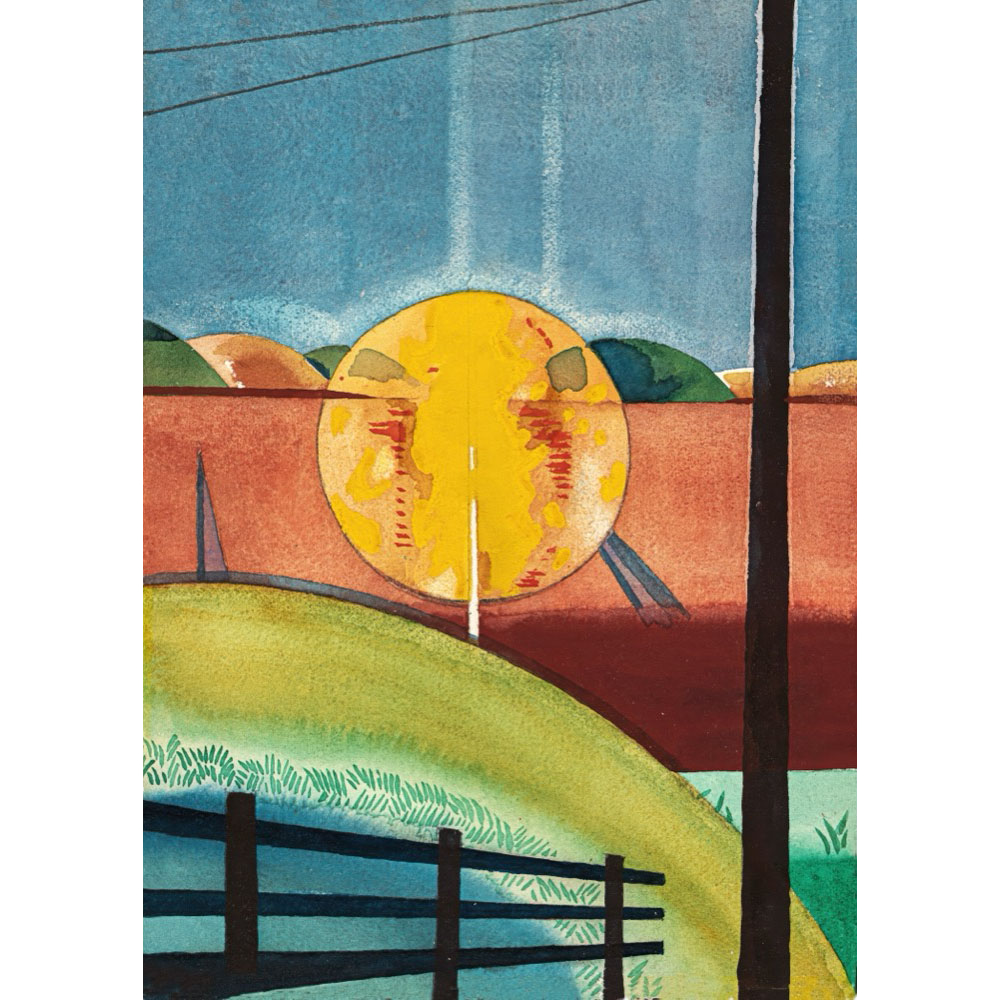
Harvest Sun — Modernist Expressionist Landscape Art Print
Harvest Sun — Modernist Expressionist Landscape Art Print
Couldn't load pickup availability
About our restored prints
About our restored prints
Expertly restored: tears and stains are fixed, original clarity and depth of color are thoughtfully revived.
- Printed on museum-quality fine art paper
- Archival inks for long-lasting color
- Professionally color-calibrated
- Most framed prints ship unassembled for safety. Assembly is simple.
Shipping & Return Policy
Shipping & Return Policy
Classic Prints/Framed prints: 1-2 weeks
Frames & Decor: 2-3 weeks
Custom Frames: 2-3 weeks
Returns within 2 weeks.
Custom Framed prints are hand assembled and cannot be returned.
See policies in the footer
Harvest Sun
A colossal sun rises over rolling hills and curved fields, casting everything in warm, rhythmic color. It’s a hymn to the earth’s cycles—growth, ripening, renewal. The modern forms make nature feel both mechanical and eternal, like a clockwork landscape.
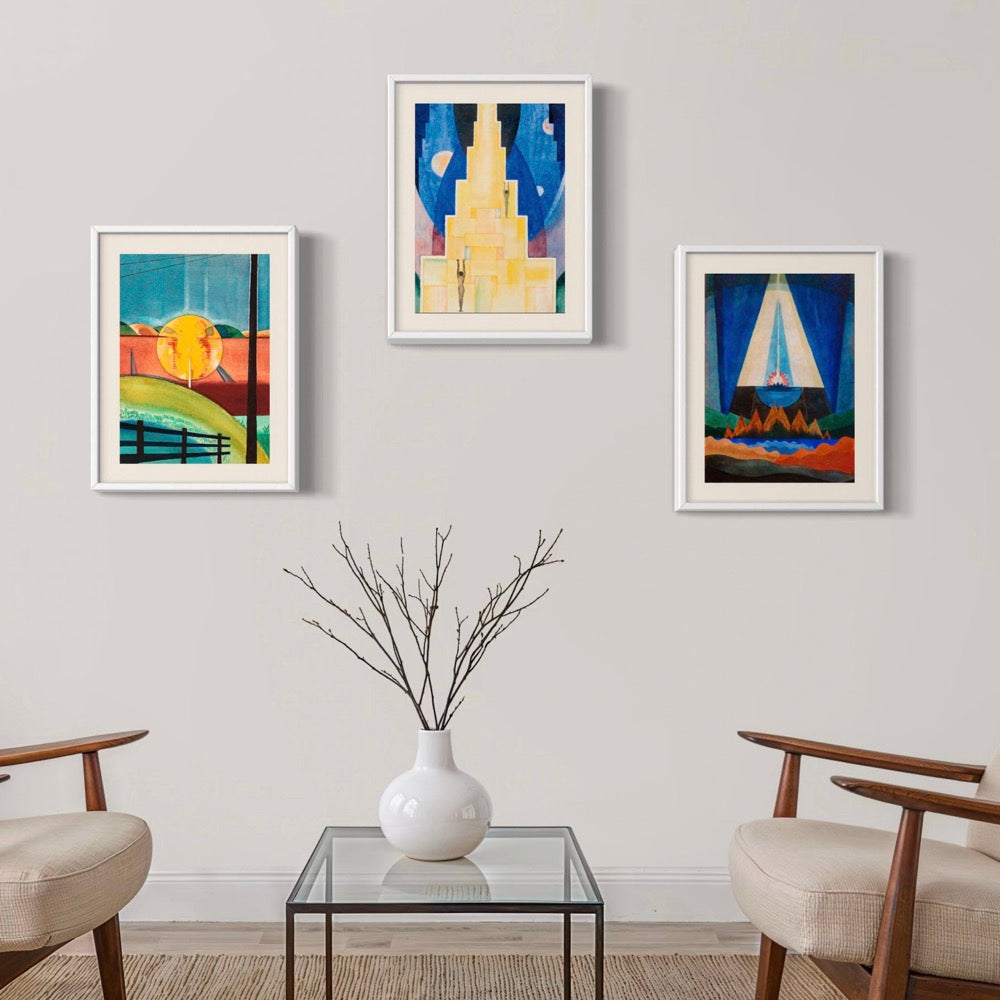
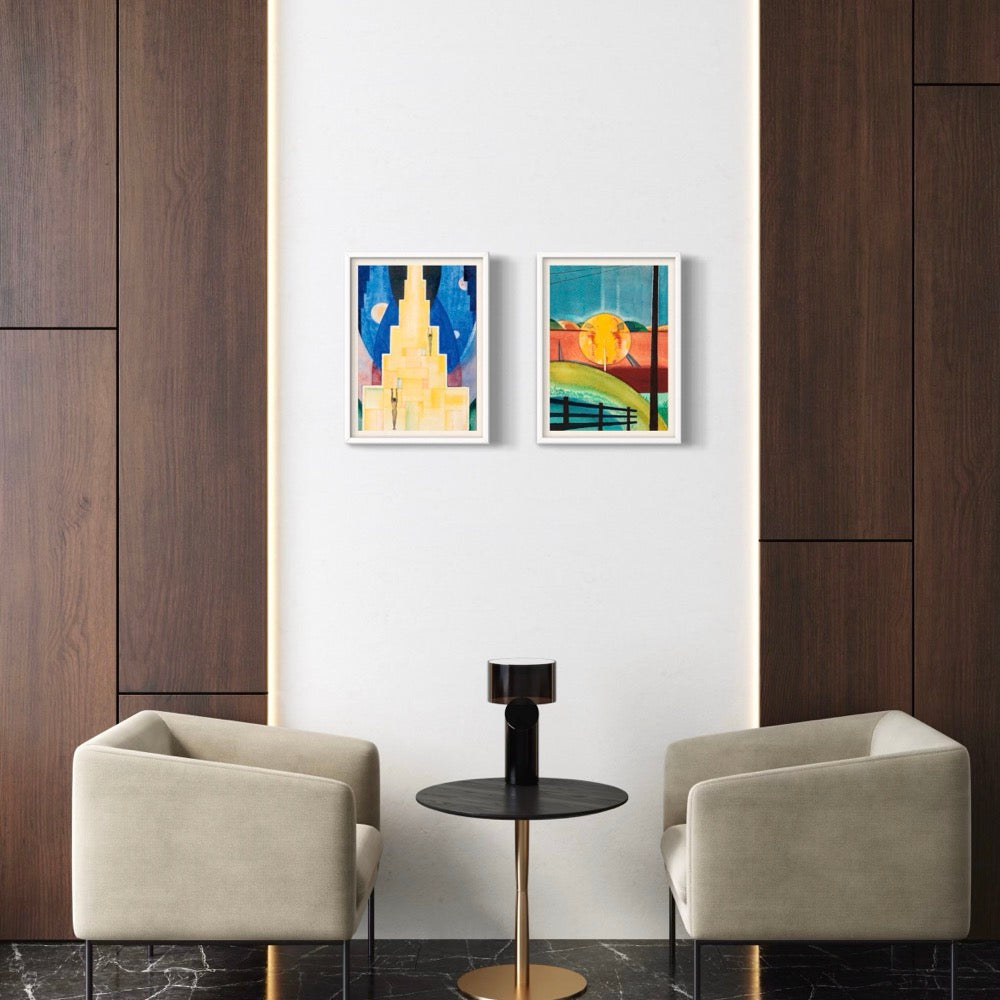
The trio traces a passage from heaven to earth—from the upward yearning of Celestial, through the ignition of The Awakening, to the grounded radiance of Harvest Sun. Each work channels a different element of light’s power: aspiration, revelation, renewal. Each piece channels a different elemental force—light, fire, sun—through bold geometry and radiant color. At once architectural and dreamlike, the paintings dissolve the boundaries between cosmic vision and earthly form.
Why We Picked Them
The set demonstrates a unique synthesis of geometry and emotion. A golden tower rises toward the moonlit sky; a triangular beam of light falls across mountains and flame; a vast sun hovers over rolling hills and fields. The works pulse with energy—shapes sharpen into symbols, while saturated blues, ochres, and reds anchor the compositions. What unites them is their balance: spiritual imagery conveyed through the formal language of modernism.
Notable Context
The paintings emerged in Germany during the turbulent years between the World Wars, when artists sought to reimagine society through art, architecture, and design. The work reflects the ideals of Expressionism and the avant-garde journal Der Sturm, blending utopian aspirations with a mystical sensibility. The imagery suggests both ancient archetypes such as pyramids, suns, cosmic alignments and the bold visual language of the 1920s, when abstraction was a vehicle for both social vision and inner transformation.
About the Artist
Fritz Stuckenberg (1881–1944) was a German Expressionist painter known for his integration of abstraction, spiritual symbolism, and architectural form. His work resonated with the experimental spirit of the early 20th century, often engaging with cosmic and metaphysical themes. Though labeled as “degenerate” by the Nazi regime and marginalized in his lifetime, his surviving works remain striking examples of the avant-garde’s attempt to envision a new reality through color and form. Today, Stuckenberg’s art is recognized for its ability to merge utopian modernism with timeless, dreamlike imagery.