


Equestrian Estates 3 — 19th-Century English Horse Portrait
Equestrian Estates 3 — 19th-Century English Horse Portrait
Couldn't load pickup availability
About our restored prints
About our restored prints
Expertly restored: tears and stains are fixed, original clarity and depth of color are thoughtfully revived.
- Printed on museum-quality fine art paper
- Archival inks for long-lasting color
- Professionally color-calibrated
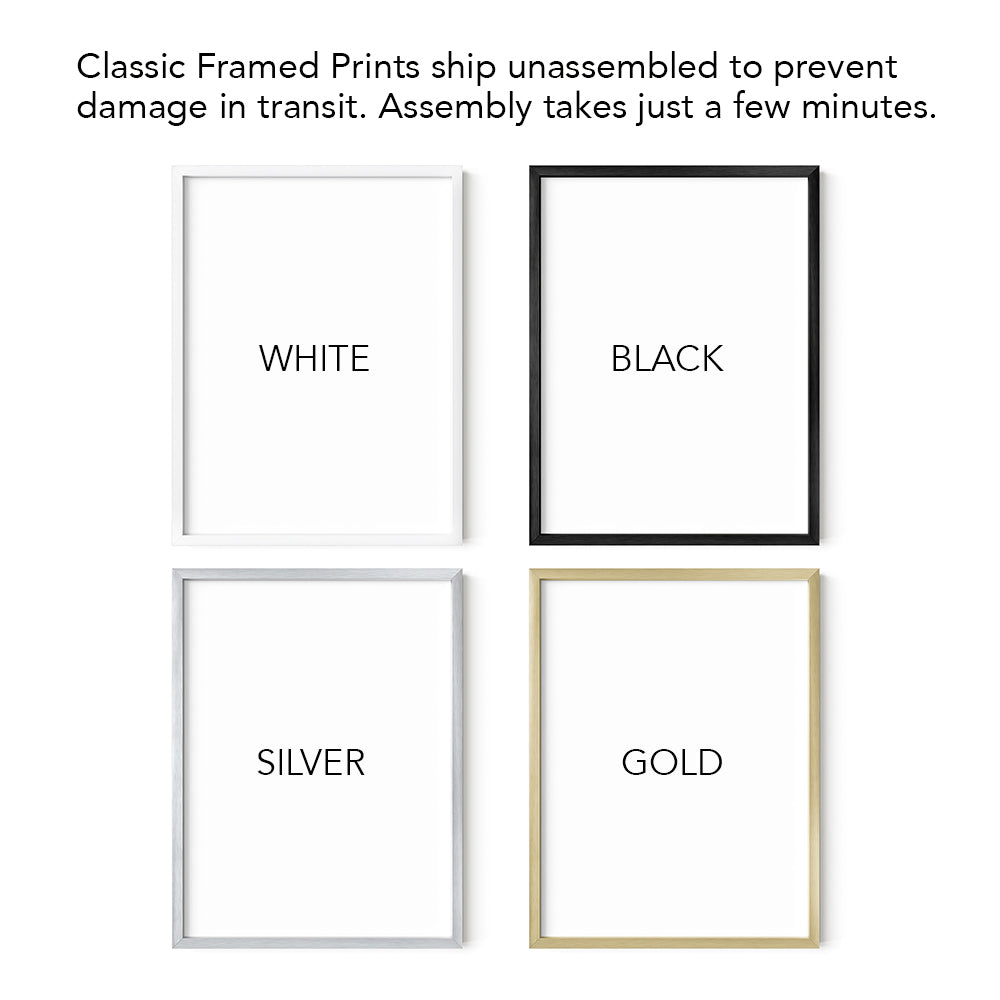
- Most framed prints ship unassembled for safety. Assembly is simple.
Shipping & Return Policy
Shipping & Return Policy
Classic Prints/Framed prints: 1-2 weeks
Frames & Decor: 2-3 weeks
Custom Frames: 2-3 weeks
Returns within 2 weeks.
Custom Framed prints are hand assembled and cannot be returned.
See policies in the footer
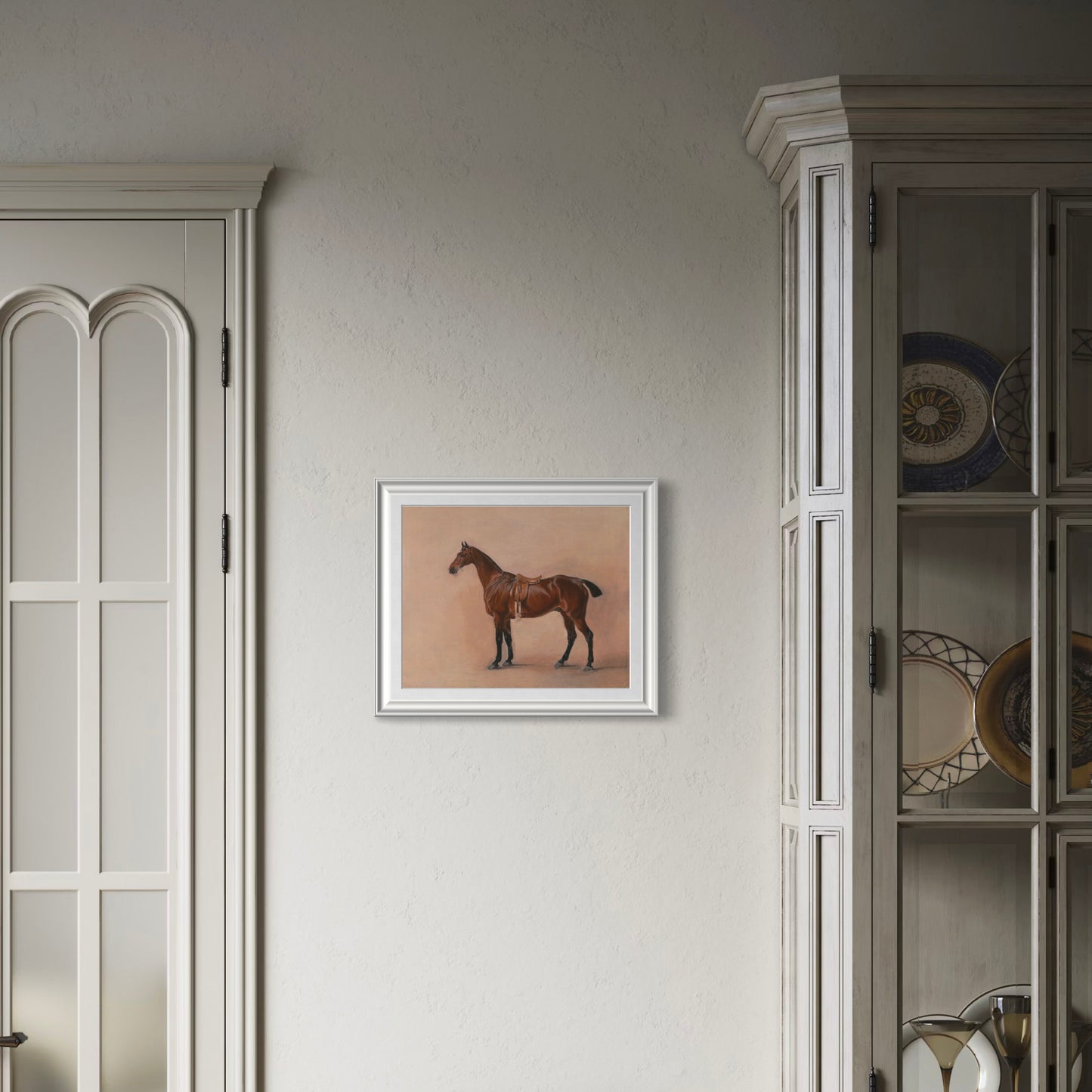
Painted in 1828, this study captures the essence of the English sporting tradition through the lens of one of its most celebrated practitioners. The bay hunter is presented with an emphasis on its alert posture and refined proportions, set against a deeply textured, atmospheric background that suggests the interior of a stable. The horse's coat is rendered with a luminous quality, catching the light to reveal the subtle play of muscle and bone beneath the surface. This work provides a sophisticated, grounded presence in a room, offering a window into the disciplined elegance of early 19th-century equestrian life.
Why We Picked It
The compelling nature of this work lies in its restrained color palette and the artist's focus on anatomical precision. By isolating the subject against a non-descript, tonal backdrop, the viewer’s attention is directed entirely toward the rhythmic lines of the horse’s form—from the arched neck to the clean definition of the limbs. The use of warm, earthy pigments creates a grounded, organic feel, while the highlight on the horse’s flank adds a layer of three-dimensional realism. It is a technical exercise in light and form that avoids sentimentality, favoring a knowledgeable, observant approach to animal portraiture.
Notable Context
John Ferneley was a central figure in the "Melton Mowbray" school of sporting art during the Golden Age of Foxhunting. This 1828 study was produced during a period of immense prosperity for the British landed gentry, who viewed their hunters as prized athletes and extensions of their own social standing. Ferneley’s work reflects the post-Napoleonic era's obsession with breeding and "blood," where the physical perfection of the horse was a metaphor for national strength. His move to Leicestershire allowed him to paint the finest horses in England, and this specific study reflects the transition from purely documentary painting to a more emotive, atmospheric style of portraiture.
About the Artist
John Ferneley was the son of a wheelwright who rose to become one of the most sought-after sporting painters in Europe. A student of Ben Marshall, Ferneley developed a style characterized by anatomical accuracy and a superior understanding of light. His studio in Melton Mowbray became a hub for the sporting elite, and his meticulous account books—which still survive—detail a career of incredible productivity and prestige. Ferneley’s contribution to art history lies in his ability to elevate the animal portrait from a mere record of ownership to a legitimate work of fine art, capturing the spirit of the 19th-century English countryside.

Find a matching frame
-
Ornate Gold Frame — Baroque Rococo Deep Relief Gilded Picture Frame
Regular price $39.00 USDRegular priceUnit price per -
Verdant Press Frame — Rococo Victorian Deep Green Distressed Gold Picture Frame
Regular price $65.00 USDRegular priceUnit price per -
Baroque in Black and Gold Frame — Rococo Ornate Lacquer Picture Frame
Regular price $70.00 USDRegular priceUnit price per -
Classic Beveled Wood Frames – Square (12x12), Rectangular (12x16/16x20)
Regular price From $55.00 USDRegular priceUnit price per -
Old World Beauty Frame — Gothic Revival Baroque Ornate Vintage Picture Frame
Regular price $60.00 USDRegular priceUnit price per


