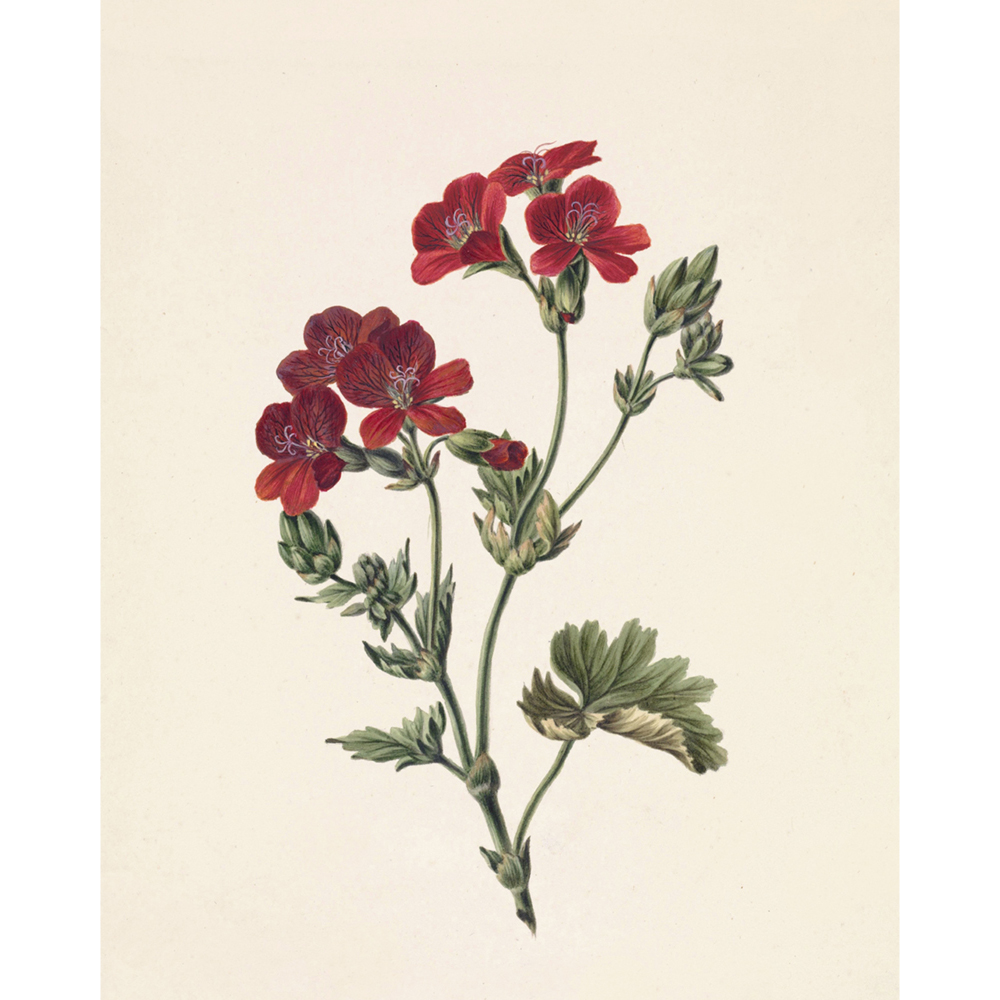
Dutch Botanical Studies, c. 1830 - Set of Four
Dutch Botanical Studies, c. 1830 - Set of Four
Couldn't load pickup availability
Shipping & Return Policy
Shipping & Return Policy
Print delivery: 5–11 days
Framed prints and decor: 2-3 weeks
Returns within 2 weeks
See policies in the footer
These 1830 watercolors exemplify a rare fusion of botanical exactitude and refined compositional sensibility. Eschewing the florid arrangements typical of his era, de Gijselaar isolates each specimen against a deliberate void—alternating between absorbent black grounds and soft, neutral papers. This contrast transforms each bloom into a study of structure and rhythm: the delicacy of a petal, the geometry of a leaf, and the interplay of color and space become the primary subjects, elevating scientific documentation into a quietly sophisticated visual experience.
Why We Picked It
The series captivates through its restraint and precision. Each brushstroke is economical yet exact, rendering the inherent elegance of the subject with a clarity that resonates across centuries. By removing environmental context, de Gijselaar directs attention to the architecture of the plant itself: the curl of a stamen, the veining of a leaf, the subtle balance of a flower’s hue against its background. These are works of observation and design, whose rigor and compositional grace align seamlessly with contemporary minimalist sensibilities.
Notable Context
De Gijselaar’s watercolors emerge from the peak of botanical illustration’s Golden Age (c. 1750 – 1850), when European naturalists and artists were deeply engaged in documenting the world’s flora with unprecedented rigor. By the early 19th century, the Linnaean system of classification had reframed plant study around formalized morphology, pushing illustrators to depict not just whole plants but the precise structures of flowers, leaves, and reproductive parts in ways that could support scientific identification and horticultural study.
In the Netherlands, this impulse toward exactitude was part of a broader tradition: multi‑volume florilegia like Flora Batava were being compiled and hand‑colored over generations, gathering thousands of plates of indigenous plants and teaching artists to work from life rather than from imagined bouquets.
Within this context, de Gijselaar’s restrained compositions, each bloom isolated against a neutral or dark ground—reflect both scientific concern and an aesthetic refinement. They are not merely decorative; they participate in a continental movement that treated botanical illustration as a disciplined art form, where visual clarity and taxonomic accuracy serve both empirical inquiry and focused, formal beauty.
Collection Highlights
-
Pelargonium Album Bicolor: A striking study of white and crimson-veined geraniums, where the dramatic dark background makes the delicate, feathered blooms appear to glow from within.
-
The Scarlet Crane’s-bill: This vibrant composition features rich, wine-red flowers and architectural buds, showcasing the artist’s mastery of saturated watercolor tones on a crisp, light ground.
-
Wild Honeysuckle Cascade: An intricate arrangement of white and pale pink blossoms that creates a sense of "modern rhythm" through its cascading, vine-like structure.
-
Golden Turk's Cap Lily: A sculptural study of nodding yellow lilies with speckled petals, emphasizing the elegant, curving geometry of the species