


CLASSIC
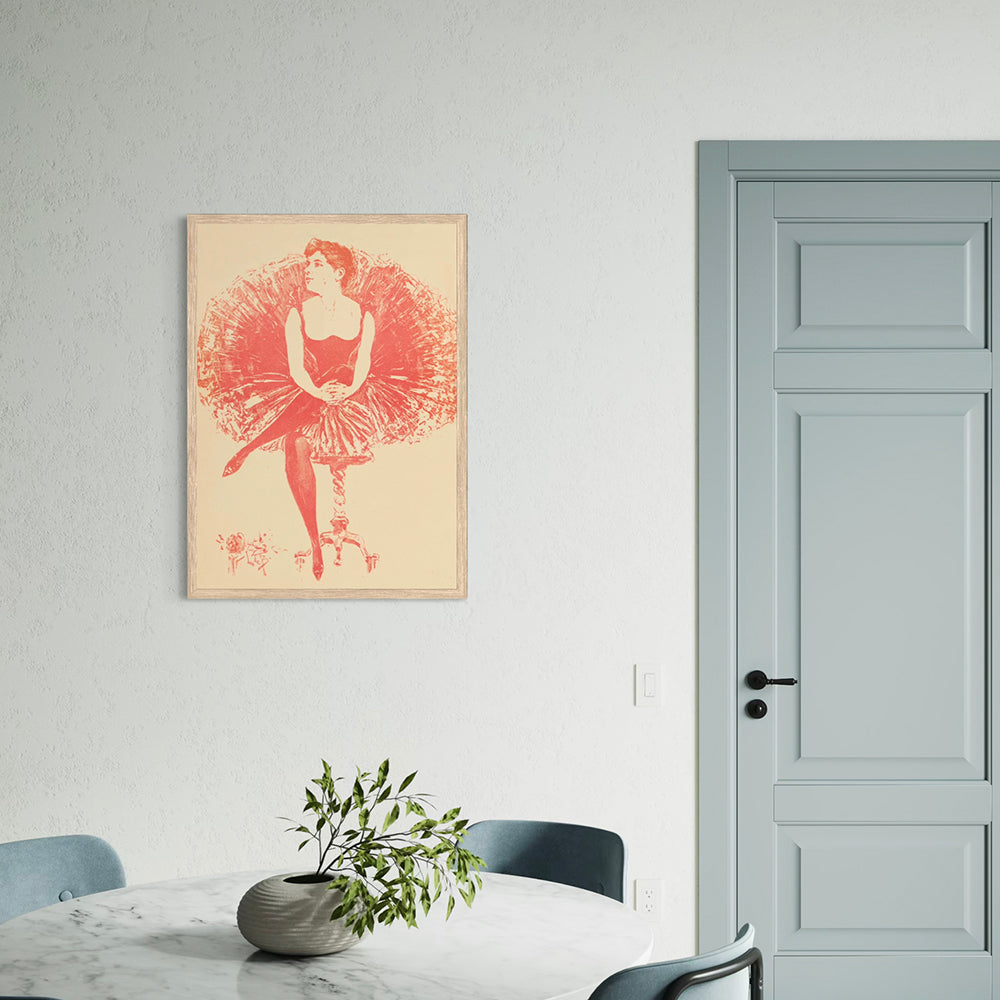
◇ Dancer in Repose
◇ Dancer in Repose
Couldn't load pickup availability
ABOUT THIS PRINT
ABOUT THIS PRINT
- Printed on museum-quality fine art paper
- Carefully restored for clarity and true-to-original color
- Archival inks for long-lasting color
- Professionally color-calibrated
- Premium, high-resolution reproduction
- Printed on demand in the USA
Shipping & Return Policy
Shipping & Return Policy
Prints: 1-2 weeks
Framed prints and decor: 2-3 weeks
Returns within 2 weeks.
Premium Framed prints are custom assembled and cannot be returned.
See policies in the footer
Classic vs. Premium
Classic vs. Premium
Classic Line = Affordable prints and modern frames typically in standard sizes.
Premium Framed Collection = Premium hand-built frames, and unique print sizes.
The lithograph offers a rare, intimate glimpse into the private world of a 19th-century performer, stripping away the spectacle of the stage for a moment of quiet composure. Rendered in a singular terracotta-pink hue against a warm cream ground, the composition utilizes the dancer’s expansive, sunburst-like tutu as a dramatic graphic frame for her central figure. The viewer experiences a sense of quiet observation, witnessing a brief pause where the persona of the entertainer softens into the reality of the individual.
Why We Picked It
The artwork's bold use of negative space and the rhythmic, sketch-like line work that suggests movement even in a seated pose. The monochromatic "sanguine" palette in a traditional Renaissance tone feels startlingly modern in this context. The balance between the subject's delicate profile and the explosive, almost abstract form of her costume makes this a masterful study in both human character and graphic design.
Notable Context
The work represents the "Print Revival" of the Belle Époque. During this era, high-end art supplements were produced in monochromatic tones like terracotta to elevate commercial illustrations into the realm of fine art. The influence of Japonisme is evident in the unconventional cropping and the flattening of the tutu into a bold silhouette—a style that defined the visual language of the early Art Nouveau movement.

Find a matching frame
-
Old European-Style Retro Frame - 10"-20"H openings
Regular price From $26.00 USDRegular priceUnit price per -
Ornate Gold Frame
Regular price $35.00 USDRegular priceUnit price per -
Verdant Press Frame - last few items
Regular price $45.00 USDRegular priceUnit price per -
Baroque in Black and Gold Frame
Regular price $45.00 USDRegular priceUnit price per -
Classic Beveled Wood Frames – Square (12x12), Rectangular (12x16/16x20)
Regular price From $42.00 USDRegular priceUnit price per


