Field Insects — Vintage Botanical Entomology Illustration Print
Field Insects — Vintage Botanical Entomology Illustration Print
Couldn't load pickup availability
Shipping & Return Policy
Shipping & Return Policy
Print delivery: 5–11 days
Framed prints and decor: 2-3 weeks
Returns within 2 weeks
See policies in the footer
A quiet scene at ground level, where miniature worlds of insect life are brought into focus through Edward Julius Detmold’s fine-lined draftsmanship, soft watercolor washes, and meticulous attention to detail.
-
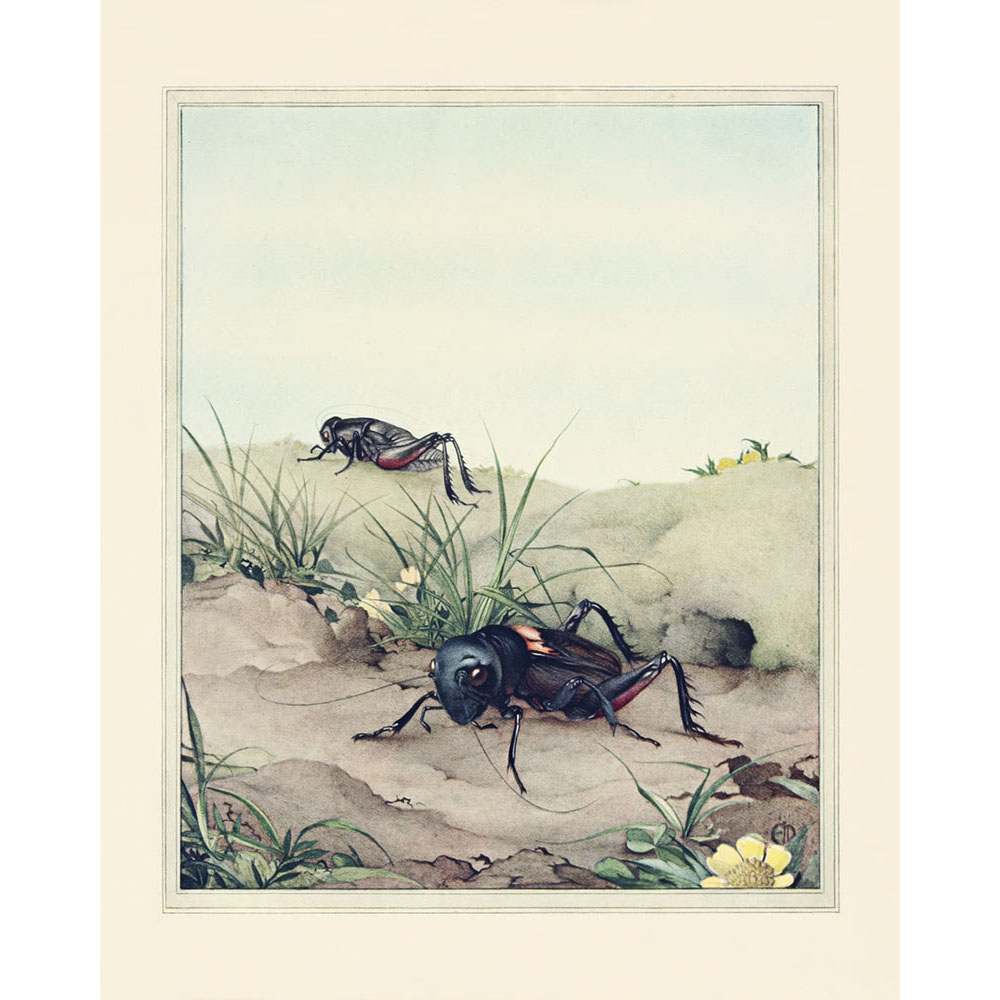
Crickets: Two field crickets move through a patch of low grass and wildflowers, their dark bodies and subtle markings rendered with scientific clarity against a calm background.
-
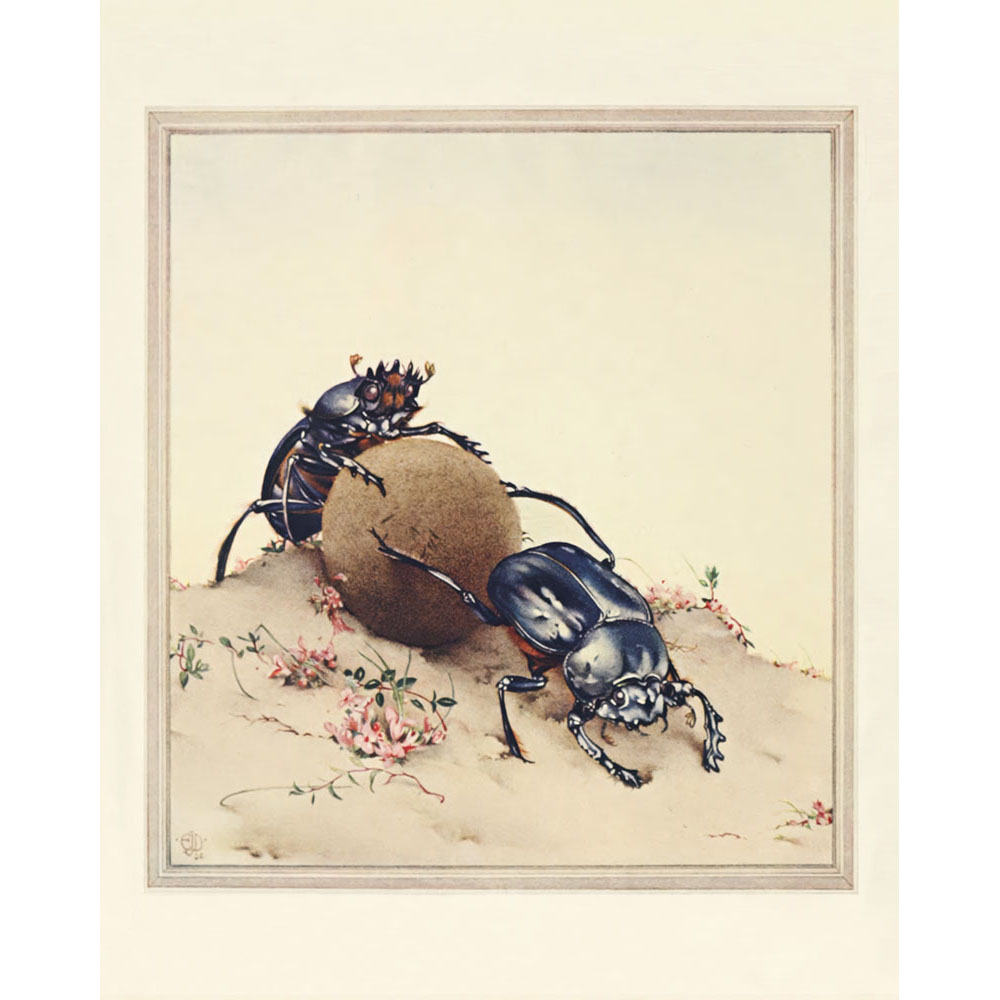
Stag Beetles: A pair of beetles collaborate to roll a large spherical object across a sparse, sandy ground scattered with delicate pink blossoms.
-
Wasp: A slender masonry wasp rests near a dried onion bulb and a textured wooden structure, capturing a quiet, intimate moment of close observation.
Why We Picked It
The piece stands out for its balance of precision and atmosphere. Detmold’s fine-lined draftsmanship gives the crickets a sense of presence, while the softly graded background creates a calm, airy space. The earthy palette and subtle botanical details anchor the composition without overwhelming the central subjects. It’s a strong example of early 20th-century natural illustration, where observation and artistry are both important.
Notable Context
Published in 1921, this plate reflects a moment when scientific illustration was transitioning from purely functional documentation to a more expressive, art-informed practice. Early-20th-century natural history books often combined exacting observation with a decorative sensibility influenced by Art Nouveau and the lingering Arts & Crafts movement. London and Paris were major centers for this kind of work, with artists producing detailed plates for publishers who catered to both scientific audiences and a growing market for finely designed books. In this environment, illustrations like this one bridged two worlds: accurate enough for study, yet composed with an eye toward color harmony, atmosphere, and visual storytelling. The close, ground-level viewpoint speaks to the era’s fascination with observing nature intimately and presenting even the smallest creatures with seriousness and aesthetic care.
About the Artist
Edward Julius Detmold (1883–1957) was a British illustrator known for his extraordinary technical skill and his sensitive treatment of animal subjects. His work often merges naturalism with a refined decorative sense, marked by meticulous linework, luminous color, and a quiet emotional tone. Detmold produced illustrations for numerous natural-history works and became one of the most recognized artists working in early 20th-century book illustration. His contributions helped elevate scientific imagery into the realm of fine art.