PREMIUM
◆ The Conservatory Fountain - custom frame (non-returnable)
◆ The Conservatory Fountain - custom frame (non-returnable)
Couldn't load pickup availability
About our restored prints
About our restored prints
Expertly restored: tears and stains are fixed, original clarity and depth of color are thoughtfully revived.
- Printed on museum-quality fine art paper
- Archival inks for long-lasting color
- Professionally color-calibrated
- Most framed prints ship unassembled for safety. Assembly is simple.
Shipping & Return Policy
Shipping & Return Policy
Classic Prints/Framed prints: 1-2 weeks
Frames & Decor: 2-3 weeks
Custom Frames: 2-3 weeks
Returns within 2 weeks.
Custom Framed prints are hand assembled and cannot be returned.
See policies in the footer
Classic vs. Premium
Classic vs. Premium
Classic Line = Affordable unframed prints and framed options
Premium - Prints in hand-built period frames
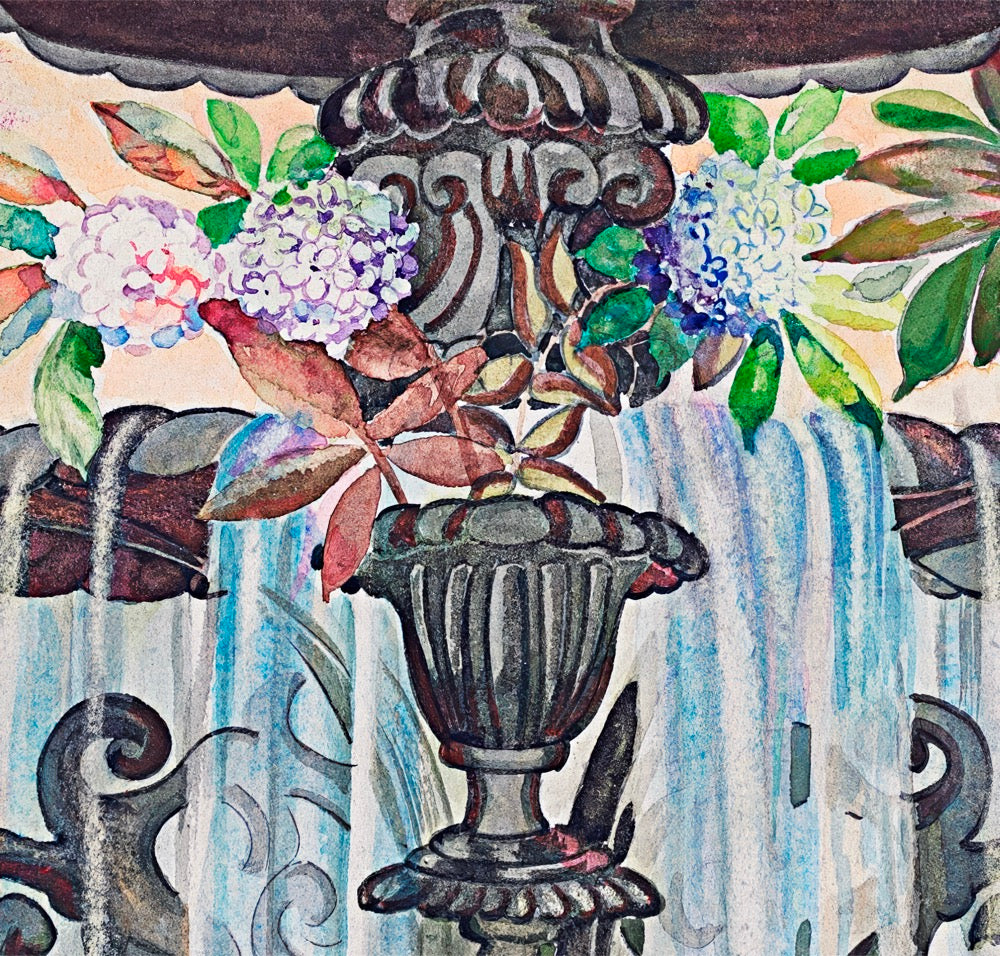
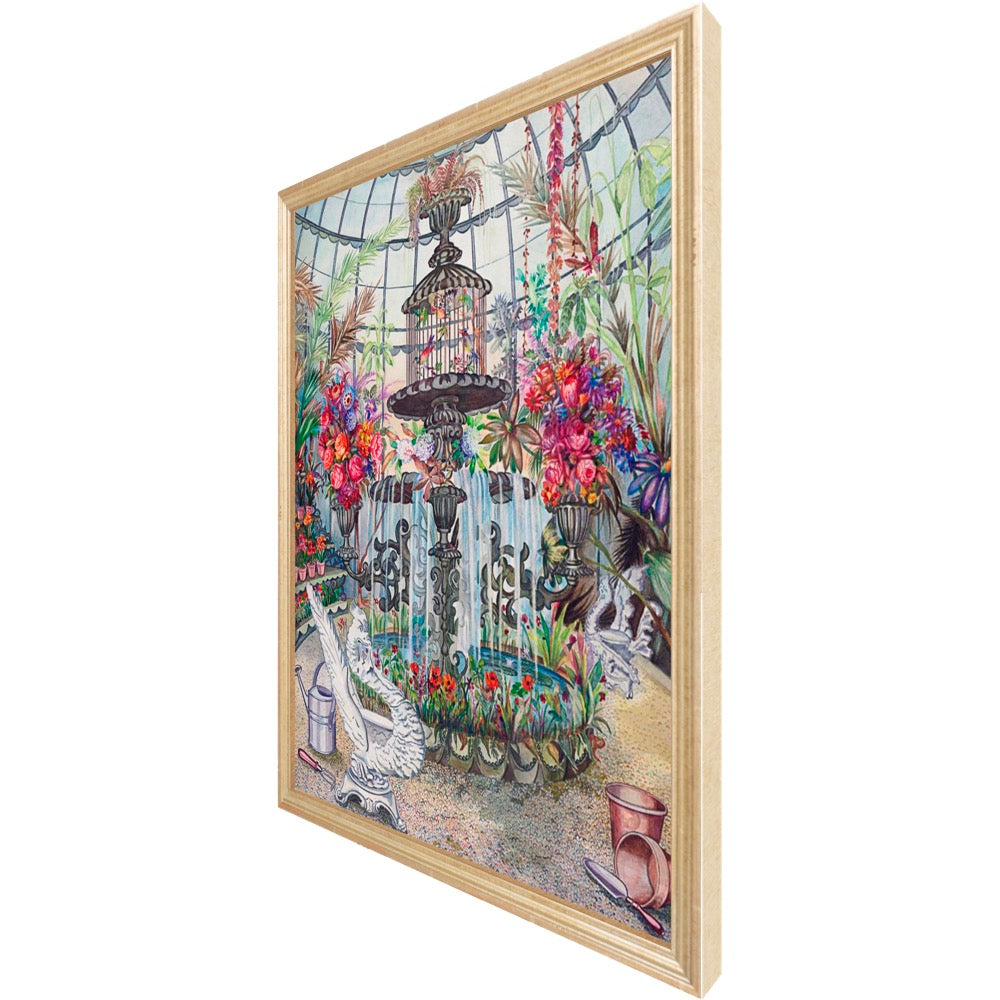
A watercolor composition of a lush, vibrant conservatory where a grand fountain takes center stage. The water cascading over intricate ironwork contrasts with the riot of flowers. It is a snapshot of a world where nature and architecture coexist contributing to a calm, serene atmosphere.
Why We Picked It
The fountain, positioned as the focal point, is rendered with exacting detail, its curves and lines accentuate the sturdiness of ironwork and the fluidity of cascading water. The use of watercolors in such a controlled scene shows the artists skill in capturing the smooth surface of the fountain and the softness of the surrounding blooms. The piece is has multiple contrasts: the dynamic, flowing water vs. the stillness of the plants, the light vs. shadow, and the mix of natural color with the more restrained, muted tones of the iron. This attention to balance and form reflects a broader trend in American realism during the late 1930s, where artists focused on portraying both the beauty and complexity of everyday life with a sense of clarity and order.
Notable Context
Created in 1938, the painting is embedded in the cultural context of the late 1930s, a period marked by the ongoing effects of the Great Depression. While the era's economic difficulties shaped much of the art of the time, artists found solace in depicting serene, ordered spaces that offered a sense of stability and escape. The conservatory, as a symbol of controlled nature, reflects an aesthetic shift where artists were increasingly interested in blending human-made structures with natural elements. This period in American art saw a move toward realism, focused on clarity of form and attention to detail, in contrast to the more abstract tendencies of earlier years. Harnly's use of botanical and architectural themes speaks to an era that sought comfort in the beauty of everyday life, even as the nation dealt with the harsh realities of economic instability.
About the Artist
Perkins Harnly, an American artist active in the early 20th century, was known for his detailed, realistic depictions of architectural and natural scenes. With a keen eye for structure and form, Harnly often explored the intersections of human-built environments and the natural world. His work from the late 1930s reflects an era where artists sought to capture the intricacies of both nature and design, often infusing their scenes with a quiet sense of order. Harnly’s style, marked by precision and technical finesse, places him firmly within the American realist tradition, where attention to detail and a focus on the ordinary became central to the artistic landscape.