


The Poppy & The Riverbank
The Poppy & The Riverbank
Couldn't load pickup availability
About our restored prints
About our restored prints
Expertly restored: tears and stains are fixed, original clarity and depth of color are thoughtfully revived.
- Printed on museum-quality fine art paper
- Archival inks for long-lasting color
- Professionally color-calibrated
- Most framed prints ship unassembled for safety. Assembly is simple.
Shipping & Return Policy
Shipping & Return Policy
Classic Prints/Framed prints: 1-2 weeks
Frames & Decor: 2-3 weeks
Custom Frames: 2-3 weeks
Returns within 2 weeks.
Custom Framed prints are hand assembled and cannot be returned.
See policies in the footer
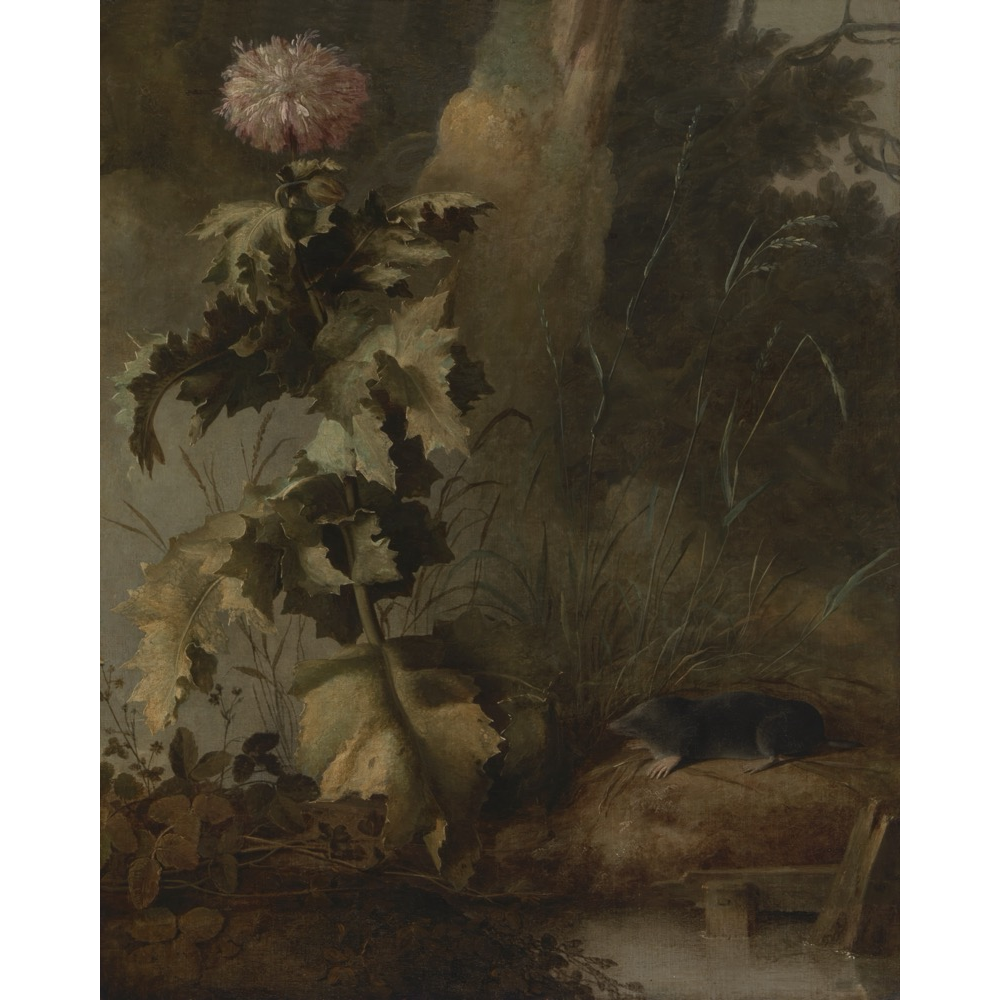
A towering, jagged-leaved poppy crowned by a ruffled blush-pink bloom dominates the left side of a shadowed woodland riverbank. Below on the right, a dark water vole rests motionless on a mossy earthen mound beside a quiet pool of water and weathered wooden pilings. Lush wild grasses, clover, and dense woodland foliage recede into a moody, atmospheric background of deep umber, olive green, and muted ochre. Painted around 1812, this intimate botanical and wildlife study elevates a quiet corner of the English countryside into a dramatic, Dutch-inspired nature portrait.
Why We Picked It
The composition relies on strong chiaroscuro lighting, illuminating the pale, serrated leaves and delicate pink petals against a deep, enveloping woodland shadow. Built through rich, layered glazes of earth pigments, the brushwork captures the contrasting textures of velvety flower petals, prickly foliage, damp soil, and the vole’s sleek dark fur. By lowering the horizon and bringing the viewer eye-level with the riverbank undergrowth, the painting transforms humble wild flora and fauna into monumental subjects.
Notable Context
During the early 19th century, the Norwich School of painters emerged as England’s first provincial art movement dedicated to direct observation of the local landscape. Inspired heavily by 17th-century Dutch Golden Age masters—particularly the forest floor still lifes (sottobosco) of Otto Marseus van Schrieck and the rustic naturalism of Jacob van Ruisdael—Norwich artists turned away from idealized classical scenery. Instead, they focused on the damp marshes, overgrown riverbanks, and untamed hedgerows of East Anglia, finding quiet drama in humble botanical and wildlife details.
About the Artist
John Crome (1768–1821), often referred to as "Old Crome," was an English landscape painter, printmaker, and co-founder of the influential Norwich School alongside John Sell Cotman. Beginning his career as a sign-painter's apprentice, Crome developed a deeply naturalistic style rooted in outdoor sketching across Norfolk and admiration for Dutch Old Masters. His work is celebrated for its rich tonal depth, tactile brushwork, and honest, unvarnished devotion to the English countryside.
Find a matching frame
-
Ornate Gold Frame — Baroque Rococo Deep Relief Gilded Picture Frame
Regular price $39.00 USDRegular price -
Verdant Press Frame — Rococo Victorian Deep Green Distressed Gold Picture Frame
Regular price $65.00 USDRegular price -
Baroque in Black and Gold Frame — Rococo Ornate Lacquer Picture Frame
Regular price $70.00 USDRegular price -
Classic Beveled Wood Frames – Square (12x12), Rectangular (12x16/16x20)
Regular price From $55.00 USDRegular price -
Old World Beauty Frame — Gothic Revival Baroque Ornate Vintage Picture Frame
Regular price $60.00 USDRegular price


