PREMIUM
Autumn Leaves Prints
Autumn Leaves Prints
Couldn't load pickup availability
Shipping & Return Policy
Shipping & Return Policy
Print delivery: 5–11 days
Framed prints and decor: 2-3 weeks
Returns within 2 weeks
See policies in the footer
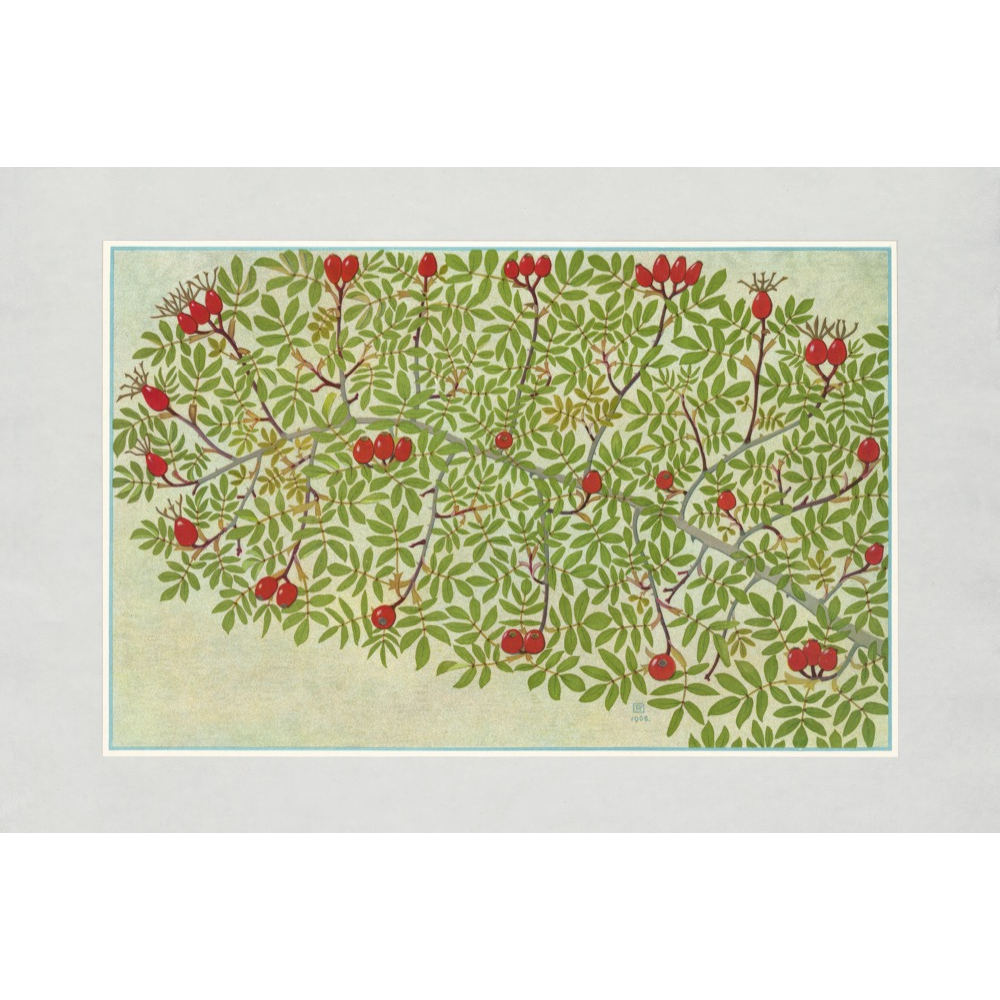
These twelve chromolithographic plates, executed between 1905 and 1909 by Swiss artist Philippe Robert, document the color transformation of Central European plant species at the turn of autumn. Each plate isolates a single branch, vine, or canopy against a flat ground stripping away landscape context to focus entirely on the leaf and the season's effect on it. The palette across the series moves from the first flush of green-to-gold through deep crimson and burgundy, with Robert treating each species as its own formal and chromatic problem. Printed from the artist's original watercolors using photochromolithography on handmade Fabriano paper, the plates are among the finest examples of Swiss Jugendstil botanical illustration.
Why We Picked It
The series occupies an unusual position: scientifically accurate enough to name the species, decoratively sophisticated enough to work in any contemporary interior. Robert's compositional decisions including upward-looking viewpoints, branches cropped at the edges of the frame, non-naturalistic grounds, owe as much to Japanese woodblock print design as to European botanical tradition. Each plate approaches its subject differently: some compositions are dense and all-over, others are spare and nearly minimal. The chromolithographic printing achieves tonal gradations from summer green through amber, orange, and deep crimson with a smoothness that reads more like painting than reproduction. The twelve plates work as a complete set or as individual pieces selected by species, color, or composition.
Notable Context
Robert executed these plates during the Belle Époque, when Art Nouveau and its German-Swiss counterpart, Jugendstil, were at their most formally rigorous. Both movements treated natural forms not as background or metaphor but as primary structural material, and the Swiss tendency was toward observed, native species rather than the exotic hothouse flora favored by French Art Nouveau. Robert's subjects are all plants of the Central European landscape, given the same focused attention a scientist might bring but rendered with a decorator's precision about color and composition. The period was also defined by the influence of Japanese ukiyo-e printmaking, which had been circulating widely in Europe since the 1850s and introduced Western artists to cropped compositions, flat color fields, and radical viewpoints. Robert absorbed that influence and filtered it through the Swiss tradition of exacting natural observation.
The photochromolithographic technique used for this folio was among the most demanding printing processes of the era with each color requiring a separate planned pass and the gradational sequences achieved across these plates represent a significant technical achievement. The typography and decorative borders of the original publication were designed by Eugène Grasset (1845–1917), the Swiss-French designer who was among the most influential figures of the entire Art Nouveau movement, known for his poster work, typeface design, and decorative arts.
About the Artist
Philippe Robert (1881–1930) was born in Le Ried-sur-Bienne in the Swiss Bernese Jura, into one of Switzerland's most significant artistic dynasties. His father, Léo-Paul Robert (1851–1923), was a distinguished wildlife painter trained at the Munich Academy of Arts, known for luminous and precise studies of birds and butterflies. The Robert family's artistic lineage extended four generations through Aurèle Robert to Léopold Robert, one of the most celebrated Swiss painters of the 19th century. Philippe absorbed this heritage of close natural observation and brought it into contact with the decorative ambitions of Jugendstil, his botanical and zoological subjects increasingly treated as pattern, composition, and color rather than pure documentation. He died at 49 in an accidental death, leaving a body of work that remains largely unknown outside Switzerland. The Neues Museum Biel holds the Foundation Robert collection of over 3,000 works spanning four generations of the family.