Two Irises Vintage Dark Academia Botanical Photography Print
Two Irises Vintage Dark Academia Botanical Photography Print
Couldn't load pickup availability
About our restored prints
About our restored prints
Expertly restored: tears and stains are fixed, original clarity and depth of color are thoughtfully revived.
- Printed on museum-quality fine art paper
- Archival inks for long-lasting color
- Professionally color-calibrated
- Most framed prints ship unassembled for safety. Assembly is simple.
Shipping & Return Policy
Shipping & Return Policy
Classic Prints/Framed prints: 1-2 weeks
Frames & Decor: 2-3 weeks
Custom Frames: 2-3 weeks
Returns within 2 weeks.
Custom Framed prints are hand assembled and cannot be returned.
See policies in the footer
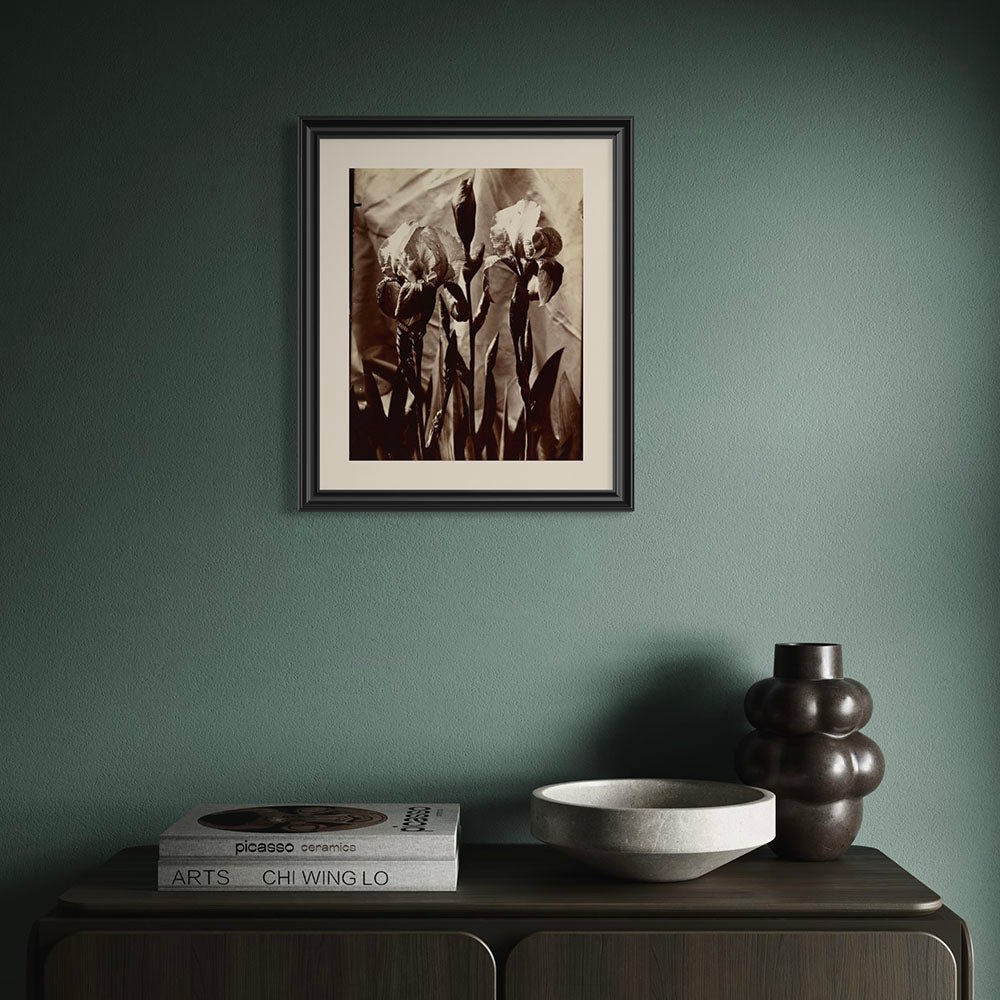
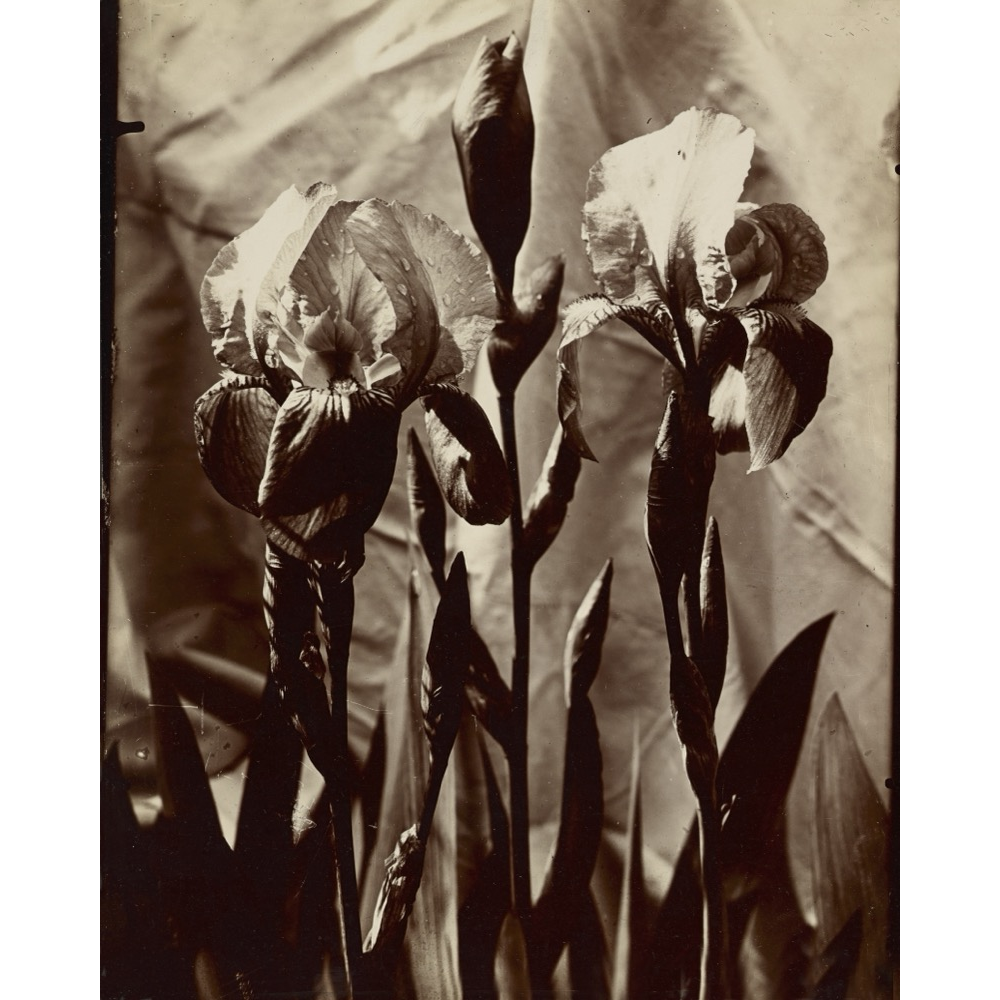
Two open iris blossoms flecked with tiny droplets of water flank a tall, tightly furled central bud against a backdrop of softly rumpled cloth. Sharp, sword-like leaves and emerging shoots rise from the base of the frame, creating a strong vertical rhythm across the composition. Printed around 1895–1900 on gelatin silver printing-out paper, this sepia-toned botanical photograph captures the sculptural architecture of the iris—from its translucent, ruffled petals to the delicate veining along its drooping falls.
Why We Picked It
Instead of isolating the flowers in sterile studio darkness, Atget suspended a simple draped sheet behind the stems, introducing soft folds of light and shadow that give the background a tactile, painterly texture. Raking natural light catches the edges of the petals and illuminates the scattered water droplets while plunging the lower stems and foliage into deep espresso tones. The upright, symmetrical arrangement of open blooms and pointed buds turns a humble garden study into a bold, graphic composition.
Notable Context
At the turn of the 20th century in Paris, Eugène Atget hung a sign on his studio door reading "Documents pour artistes"(Documents for artists), supplying painters, sculptors, textile designers, and Art Nouveau decorators with direct visual studies of nature and architecture. Unlike pictorialist photographers of the era who manipulated negatives to mimic soft-focus paintings, Atget relied on a large-format wooden view camera and long exposures to record crisp botanical structure and unvarnished detail. Decades later, Surrealists and modernists championed these straightforward nature studies for their uncanny clarity and poetic stillness.
About the Artist
Eugène Atget (1857–1927) was a pioneering French photographer celebrated for his exhaustive, poetic documentation of Old Paris and its surrounding gardens, parks, and botanical life. After working as a sailor and provincial actor, he turned to photography in his thirties, producing thousands of glass-plate negatives over three decades. Celebrated by later modernists including Berenice Abbott and Man Ray, Atget’s work bridged 19th-century documentary craft and 20th-century fine art photography.