


Seated Girl — Impressionist Seated Figure Portrait Art Print
Seated Girl — Impressionist Seated Figure Portrait Art Print
Couldn't load pickup availability
About our restored prints
About our restored prints
Expertly restored: tears and stains are fixed, original clarity and depth of color are thoughtfully revived.
- Printed on museum-quality fine art paper
- Archival inks for long-lasting color
- Professionally color-calibrated
- Most framed prints ship unassembled for safety. Assembly is simple.
Shipping & Return Policy
Shipping & Return Policy
Classic Prints/Framed prints: 1-2 weeks
Frames & Decor: 2-3 weeks
Custom Frames: 2-3 weeks
Returns within 2 weeks.
Custom Framed prints are hand assembled and cannot be returned.
See policies in the footer
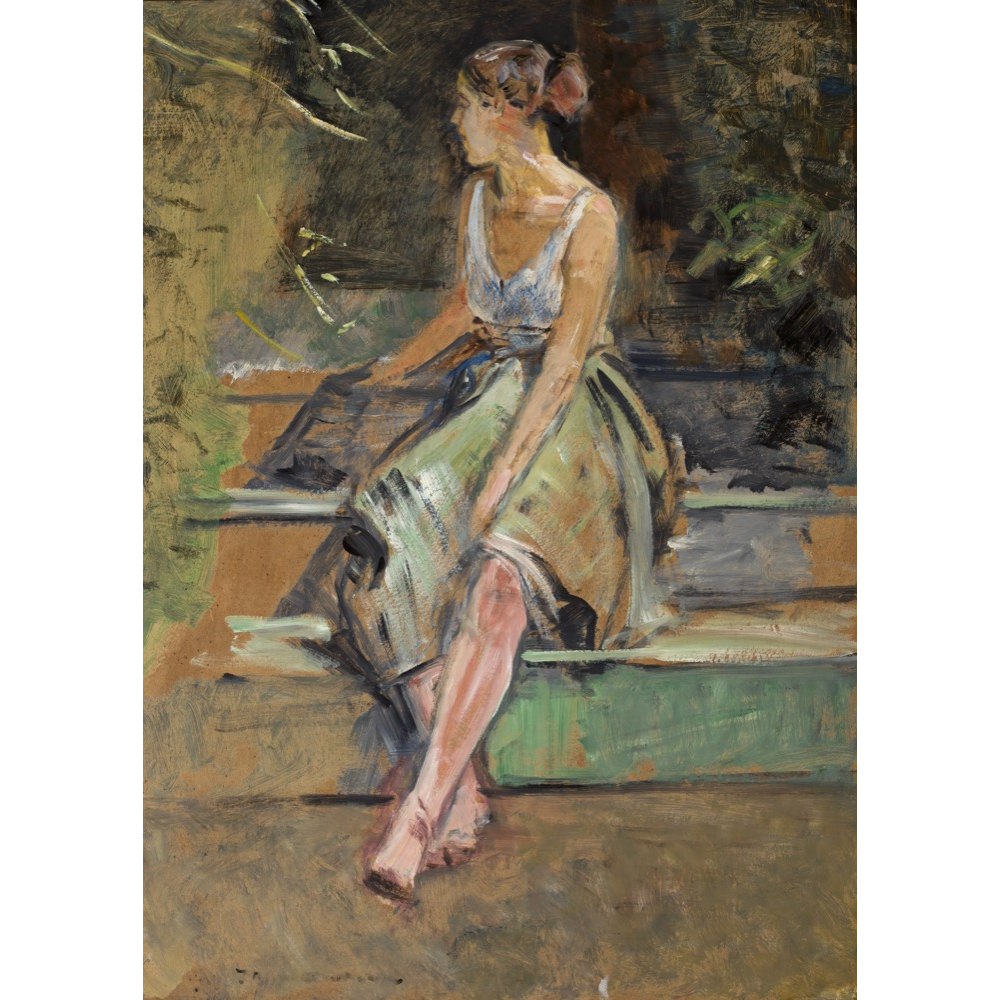
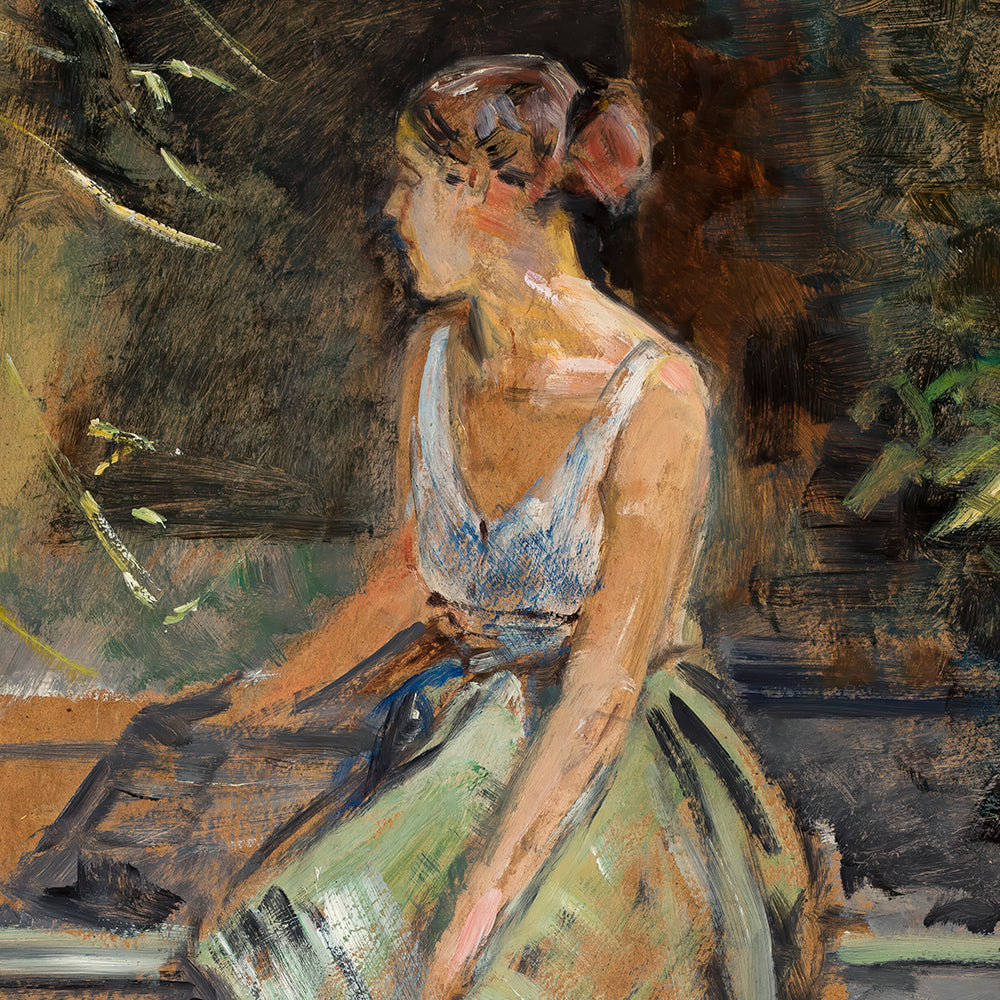
A young woman sits barefoot on low wooden steps, turned in profile with her hair gathered in a reddish-brown bun. She wears a white V-neck bodice and a muted green skirt that drapes loosely across her crossed legs, which are illuminated in warm, pale tones. The visible texture of the brown pasteboard ground shows through the loose, energetic brushwork, grounding the figure in an earthy, unpolished warmth. Dark, sketchy foliage frames the background, casting long shadows across the wooden structure. This composition reflects a direct study from life, capturing a quiet, unidealized moment outdoors.
Why We Picked It
The work is built on a direct, expressive oil technique on raw pasteboard, allowing the warm brown paper ground to function as a mid-tone throughout the background and steps. The color palette relies on low-chroma greens, warm terracottas, and soft flesh tones defined by rapid, visible hatching. Strong directional light catches the bridge of the nose, the shoulder, and the shin, establishing a high-contrast linear rhythm. The brushwork remains loose and unblended, preserving the spontaneous marks of the artist's hand across the garments and surrounding foliage.
Notable Context
Created in 1918, this work emerged during a period of profound political and social upheaval in Poland, marked by the end of World War I and the recovery of national independence. Artistic production during this era navigated a complex tension between European symbolist movements and a renewed focus on national identity, realism, and local landscape. While avant-garde circles pushed into radical abstraction, many traditional painters continued exploring intimate figure studies grounded in symbolism and regional academic traditions. The choice of modest materials like pasteboard often reflected wartime resource constraints and a preference for immediate, studio-based observational studies over grand historical canvases.

Find a matching frame
-
Ornate Gold Frame — Baroque Rococo Deep Relief Gilded Picture Frame
Regular price $39.00 USDRegular price -
Verdant Press Frame — Rococo Victorian Deep Green Distressed Gold Picture Frame
Regular price $65.00 USDRegular price -
Baroque in Black and Gold Frame — Rococo Ornate Lacquer Picture Frame
Regular price $70.00 USDRegular price -
Classic Beveled Wood Frames – Square (12x12), Rectangular (12x16/16x20)
Regular price From $55.00 USDRegular price -
Old World Beauty Frame — Gothic Revival Baroque Ornate Vintage Picture Frame
Regular price $60.00 USDRegular price


